
How to Declutter Kitchen Counters (Without Getting Overwhelmed)
A weekend-sized plan for clearing the most contested real estate in your home — your kitchen counters — and keeping them clear past Tuesday.
7 min read
A mindful, practical approach to designing, organizing, and living in a kitchen that holds only what earns its place — and lets the rest go with gratitude.

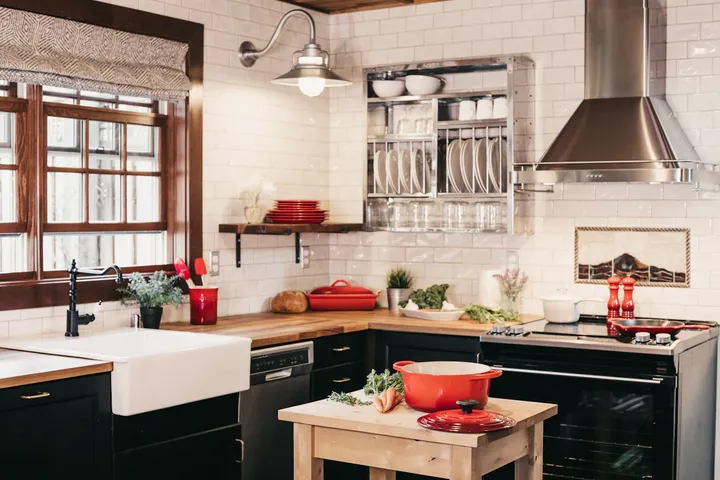
There’s a particular kind of quiet that settles over a kitchen with clear counters. Not the sterile quiet of a showroom. The lived-in quiet of a room that someone has edited on purpose. A kettle where the kettle belongs. A knife within reach. Morning light falling on a single cutting board instead of a tangle of appliances.
Minimalism in the kitchen is not about owning very little. It’s about owning only what serves, and the difference matters. A spare kitchen that frustrates you is a failure. A full kitchen where every object is loved and used is a success.
This is the anchor piece for everything we write about living minimally in the kitchen: what the word actually means, how to get there without losing your mind, and how to keep it past the first enthusiastic week.
The word minimalist gets stretched to cover a lot of things. White walls. Hidden storage. A single $400 knife on a magnetic strip. Strip away the aesthetic and you’re left with a simpler idea:
A minimalist kitchen is one where every object is used, loved, and in its place.
That’s it. The look follows from the practice. Remove what you don’t use and what’s left tends to breathe. Give objects homes and the surfaces stay clear. The “minimalist kitchen” you saw on Pinterest didn’t get that way because someone bought matching canisters. It got that way because someone decided, object by object, what belonged.
This is freeing, because it means you can’t get it wrong by buying the wrong thing. You can only get it wrong by avoiding the decisions.
Before we touch a single drawer, learn these three questions. Every object in your kitchen has to answer at least two of them with an honest yes.
A wedding-registry espresso machine used twice a year fails questions one and three, no matter how much you love the idea of it. Your grandmother’s cast iron, used weekly, passes all three. Keep the cast iron. Photograph the espresso machine and let it go.
Most decluttering attempts fail for the same reason: people start with the hardest, most sentimental category. Usually the junk drawer, or the appliance graveyard. They burn out before lunch.
Work from easy to hard instead. Each small win funds the next.
For anything you’re releasing that still has life in it, donate it or gift it. There’s a particular satisfaction in knowing an object is going somewhere it’ll be used instead of buried in your cabinet.
This is the single habit that keeps a minimalist kitchen minimalist. When something new comes in, something comparable goes out.
Buy a new chef’s knife? The old one is donated. Received a beautiful Dutch oven as a gift? The dented stockpot you never liked leaves with it.
The rule does two things. Mechanically, it caps your inventory. Psychologically, it forces you to ask what is this replacing? before you buy, which prevents the slow drift back to clutter that dooms most “getting organized” weekends.
We wrote a whole piece on the one-in, one-out rule and how to make it stick. The short version: keep a small box by the door. When you’re tempted to break the rule, look at the box.
Once you’ve edited, you can design. The visual principles of a calm kitchen are simple, and they reinforce each other.
Horizontal surfaces are sacred. Counters are for working, not storing. If an object lives on the counter, it should either be used daily (kettle, knife block, cutting board) or be beautiful enough to justify its presence.
Hide the loud, show the lovely. The blender goes in a cabinet. The wooden spoons go in a crock on the counter. The stainless pot set hides away; a single copper saucepan hangs where you can see it.
Choose a restrained palette. Two or three materials, maximum. Wood, stone, ceramic. White, oat, sage. Restraint here is what reads as “designed,” not because of any rule but because the eye finally has somewhere to rest.
Let light be the loudest thing. A kitchen with clear counters and bare windows lets the morning sun do the work that a hundred decorative objects would try and fail to do.
If you’re setting up a first kitchen, or rebuilding one after a move, here’s what we’d put on the list, in order of priority. Nothing here is precious. All of it can be had modestly or invested in over time.
That’s enough to cook nearly anything. Everything else is addition by personal preference.
A minimalist kitchen is a practice, not a finish line. You will drift. You’ll come home from a trip with a souvenir mug. A friend will give you a bread maker. A relative will downsize and bequeath you their entire cake-decorating kit.
That’s fine. The practice isn’t preventing the drift. It’s noticing it and correcting, gently, before it accumulates.
Once a season, walk through your kitchen with the three questions. Open every cabinet. Be honest but not cruel. Let the room tell you what it wants to be.
Read more from the Minimalist Kitchen Living pillar.