
How to Organize a Kitchen With No Pantry
How to keep a pantry-free kitchen calm and functional — using cabinet interiors, vertical wall space, and a strict decant-and-edit system to replace the storage a pantry would normally give you.
A weekend-sized plan for clearing the most contested real estate in your home — your kitchen counters — and keeping them clear past Tuesday.
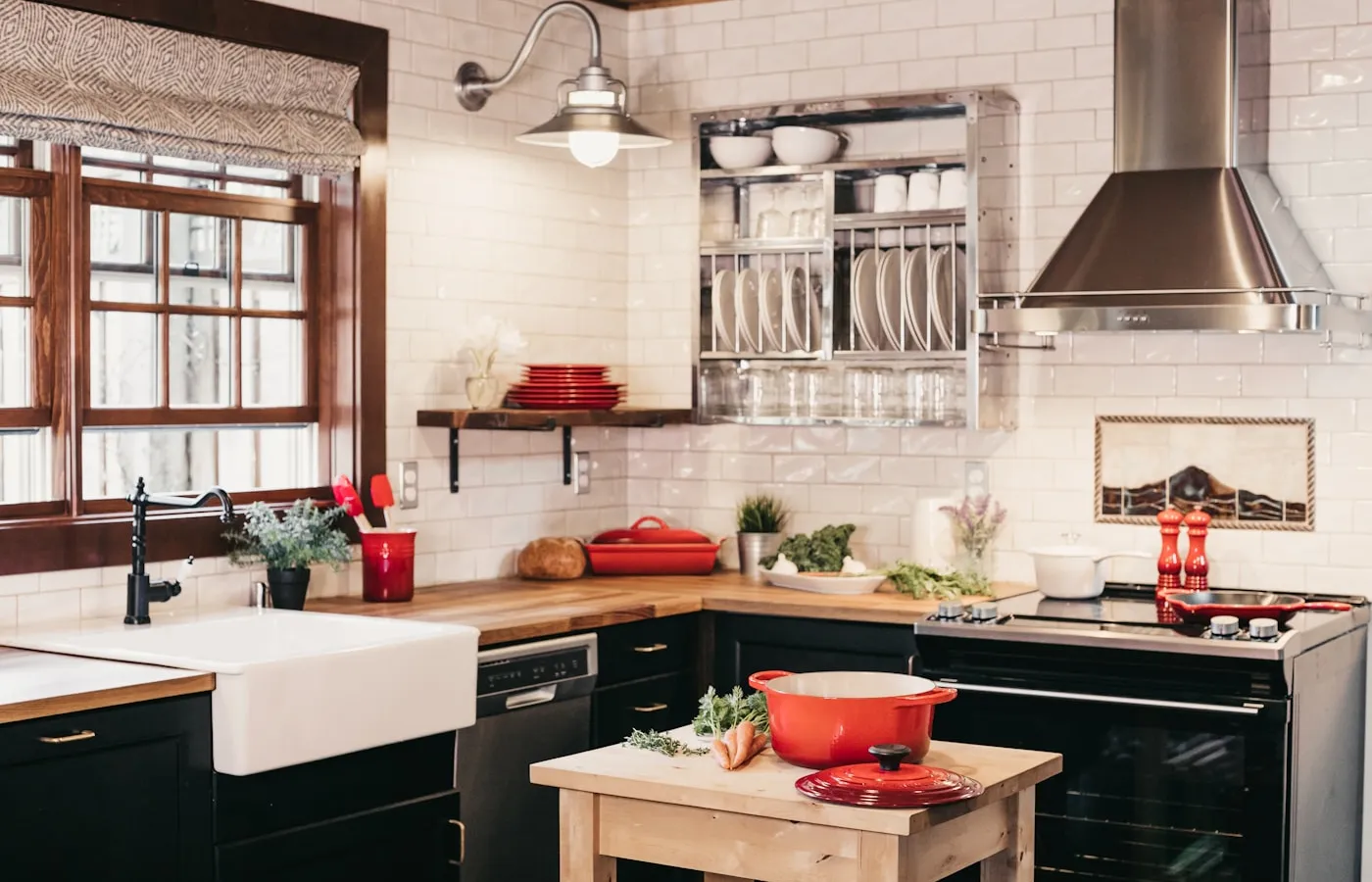
Kitchen counters are the most contested real estate in your home.
They’re where you chop onions, sort the mail, dry the clean dishes, store the toaster, set down the groceries. And somehow, where that one screwdriver has been sitting since March. They do a lot. So they accumulate a lot.
This is a focused plan for getting them clear, and keeping them that way. Not a whole-kitchen declutter. Just the counters. You can do this in a weekend.
Counters accumulate because they’re the path of least resistance. Putting the scissors away means opening a drawer; setting them on the counter means letting go of your hand. The counter always wins.
Multiply that by every object in the kitchen, every member of the household, every day, and you get a surface that fills up not through any single decision but through the absence of decisions. No one chose for the counter to look like that. It just happened, because no one chose otherwise.
Clearing it is mostly about making the easier path also the correct path. We’ll get to that.
Don’t try to do the whole counter at once. You’ll stall. Work in four zones, in this order. Each takes ten to fifteen minutes.
Start here because it’s the easiest win and you need the momentum.
You’ll be surprised how much surface appears.
The next layer is stuff that already has a place to live and just hasn’t been put there.
Walk each object to its home. If it doesn’t have a home, it goes in a temporary box for zone four.
This is where it gets real. The appliances on your counter represent ongoing decisions.
For each one, ask:
Common casualties: the second coffee maker, the toaster oven duplicating the oven’s job, the blender used for one smoothie phase, the stand mixer you swore you’d use weekly.
Be honest. The space you free up is worth more than the appliance.
Everything left in your temporary box is stuff that doesn’t have a designated home. This is the stuff that’s been quietly living on your counter because no one decided where else it should go.
Three options, in order of preference:
Take your time with this box. Don’t force it back onto the counter just to be done.
Clearing the counters is the easy part. Keeping them clear is the practice. Three small rules do most of the work.
When you pick something up, put it where it goes, not on the counter. The counter is not a waiting room.
This sounds trivial and is in fact the single most effective habit you can build. It takes about two weeks to feel automatic.
Once a day, after dinner works well, spend five minutes returning the counters to clear.
Set a timer. Walk the kitchen. Put everything that landed on the counters during the day back where it belongs. Wipe the surface. Done.
Five minutes is the entire investment. Skip it for three days and you’ll be doing zone one again.
Allow yourself exactly one small curated object on each section of counter. A bowl of fruit, a wooden cutting board, a vase, the kettle. One beautiful thing per zone.
This does two things. It gives the eye somewhere to rest. And it forces every other object to justify itself against the one you’ve chosen.
The counter isn’t empty in a real kitchen. Some objects live there by design, and should.
Things that earn counter space:
Things that don’t:
If an object is on the counter and you’re not sure whether it should be, the answer is almost always no.
Within a week of clearing your counters, you’ll notice something has shifted. Not just in how the kitchen looks, but in how it feels to walk into.
A clear counter is an invitation to cook, to sit, to start something. A cluttered one is a to-do list you can see.
The five-minute daily reset is the whole practice. The counters don’t need to be perfect. They just need to not be asking things of you the moment you walk in.
Read more from the Minimalist Kitchen Living pillar.