
A Simple Evening Kitchen Reset
Choose a two-, ten- or twenty-minute evening kitchen routine that handles food safely and leaves a usable surface for tomorrow.
6 min read
Plan small batches, reuse ingredients and freeze later portions with a practical fridge schedule for one person.
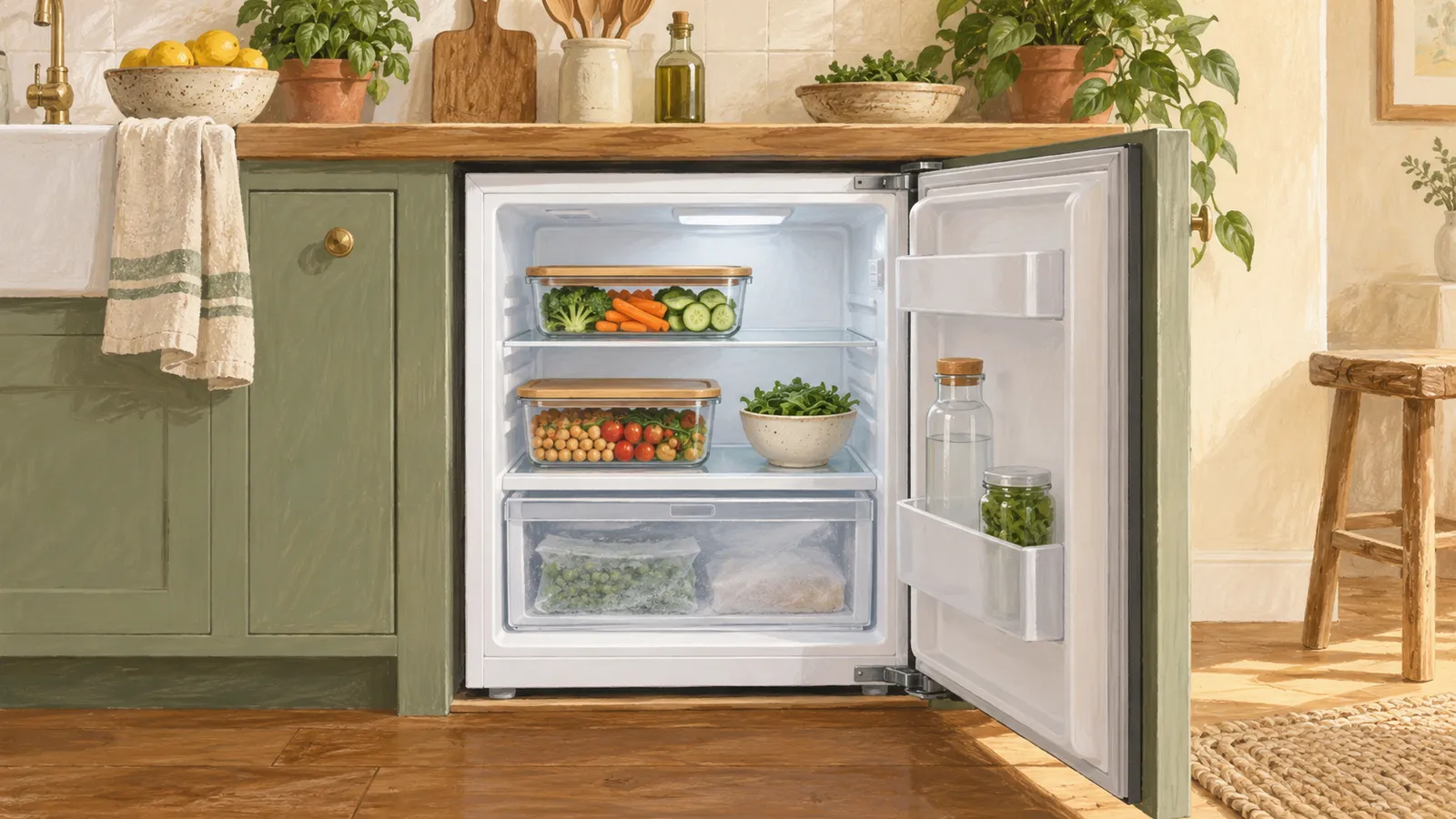
AI-generated editorial illustration; a conceptual scene, not a product photograph.
For one person with a small fridge, prep two near-term meals and freeze the portions intended for later. Choose ingredients that appear in several dishes, keep some foods uncut until you need them, and leave room for ordinary groceries. A fridge crowded with seven identical lunch boxes can be less useful than one small batch and a clear plan.
Spend your prep time on the meal you most often struggle to get on the table. If breakfast is easy and dinner becomes a last-minute problem, prepare something for dinner.
Mark work lunches, meals out and evenings when you expect to cook fresh food on your calendar. A plan for five dinners is excessive if you will be home for three.
The University of Minnesota’s meal-planning guidance recommends checking existing food and planning around your schedule. Apply that to storage too. Open your fridge before writing the shopping list. Which shelf can hold prepared food without obstructing the appliance’s vents? Which ingredient already needs using?
Give yourself a small target, such as two dinners and one freezer portion. You can add a lunch next time if the food gets eaten and the storage works. Avoid judging a successful prep session by the number of containers it produces.
Make those decisions before you start cooking: what will you make, where will it go, and when will you eat it? With the plan settled, you can give more attention to the cooking itself, as described in our guide to cooking as meditation.
Place your empty containers on the shelf you intend to use. Include their lids and leave the clearances specified by your fridge manufacturer. If they do not fit empty, a larger recipe will not solve the problem.
A shallow container is useful for cooling a portion of cooked food. One oversized tub can occupy the whole shelf and encourage you to reheat more than you need. Use individual portions for freezer meals so you can take out one dinner without thawing the entire batch.
Choose a container that holds your usual meal, with the headspace required for freezing. A soup serving and a sandwich lunch may need different shapes. If you are deciding between materials, our glass and stainless steel container comparison covers lids, carrying weight and reheating.
Choose one cooked base that can become more than one dinner, a vegetable you enjoy in several forms, a fresh finishing ingredient and a convenient backup. Lentils, carrots, a lemon and bread make a flexible starting point. Chickpeas, cabbage, yoghurt and tortillas are another possibility.
Use a recipe with clear cooking instructions for the base; the schedule below only shows how to store and use the portions. Season lightly enough that the base can take a different finish later. Store dressings separately when they would make bread or greens soggy.
Some ingredients can remain in their ordinary packaging until the day you need them. You do not gain much by moving every carrot or unopened yoghurt into a dedicated prep box. Keep the manufacturer’s storage instructions and use-by dates in view.
Buying smaller amounts can be cheaper overall if a large pack repeatedly goes uneaten. Alternatively, freeze a suitable ingredient in useful portions when its instructions allow. The choice depends on your local prices, freezer space and eating habits; bulk purchasing is not automatically a saving.
For this hypothetical menu, prep on Sunday evening, refrigerate portions for the next two days and freeze later cooked portions on prep day. Quantities depend on your appetite and recipe. Cook the lentil base using a suitable recipe. Buy bread in a size you will use, or freeze extra slices.
| Day | Dinner | What is prepared | Storage decision |
|---|---|---|---|
| Sunday | Lentil and carrot bowl | Cook a modest lentil base and carrots | Eat one portion; divide the rest promptly |
| Monday | Lentil soup with toast | Add stock to a refrigerated portion | Use a portion cooled and stored on Sunday |
| Tuesday lunch | Carrot and lentil wrap | Fresh wrap, lemon dressing | Eat the remaining fridge portion within 48 hours of prep |
| Wednesday | Fresh egg or bean toast | Cook or assemble on the day | No Sunday leftovers waiting in the fridge |
| Thursday | Lentil dinner from the freezer | Thaw one frozen portion safely | Move it to the fridge on Wednesday; reheat thoroughly |
| Friday | Flexible meal | Use an unopened pantry staple or shop fresh | Avoid adding a cooked portion merely to fill the calendar |
Soup, a wrap and a bowl use the same ingredients with different textures and finishing steps. If you know you dislike repeated ingredients, prep fewer meals and use the freezer as a backup rather than a weekly menu.
In the US, USDA guidance on leftovers advises prompt refrigeration in shallow portions, a fridge at 4°C (40°F) or below and a usual refrigerated leftover window of three to four days. In hot conditions above 32°C (90°F), its room-temperature limit is one hour rather than two.
The UK Food Standards Agency advises eating refrigerated leftovers within 48 hours or freezing them. The example above uses that shorter window. Food-specific instructions can be stricter, and a use-by date still matters. Do not extend storage just because a container looks tidy or food smells normal.
Label cooked portions with their contents, prep date and intended use. Freeze the later portions on prep day after appropriate rapid cooling; do not wait until they are almost at the end of their fridge life. Follow local guidance and your appliance instructions for thawing and reheating.
If your fridge has no reliable freezer compartment, change the menu. Prep two meals, then cook a small fresh batch later. A decorative icebox or compartment not rated for long-term frozen storage is not interchangeable with a freezer.
At the end of the week, check which food was eaten and which was left. Was one portion too large? Did fresh herbs get forgotten? Did the freezer meal rescue a busy evening? Those observations tell you what to change.
Keep the successful ingredient pairing and adjust only the troublesome part. Buy fewer greens, freeze the bread sooner or move the second prep session to a less busy evening.
For a tighter workspace, use our small-kitchen prep sequence. Keep the next batch small enough that you can still find the milk, fit fresh groceries on the shelf and see which dinner needs eating first.
Sources describe their own scope and limitations. Read our sourcing policy.
Read more from the Mindful Cooking & Eating pillar.
Mindful
Choose a two-, ten- or twenty-minute evening kitchen routine that handles food safely and leaves a usable surface for tomorrow.
6 min read
Sequence preparation, cooking, cooling and clean-up around one working surface and limited equipment.
7 min read
Compare prepared ingredients with complete meals through worked examples, realistic remaining tasks and short storage schedules.
6 min read