
Carbon Steel vs Cast Iron
Choose between seasoned carbon steel and cast iron by actual weight, shape, cooking habits and maintenance.
7 min read
Compare food-container bodies, lids, leaks, carrying weight and exact appliance compatibility before buying a set.
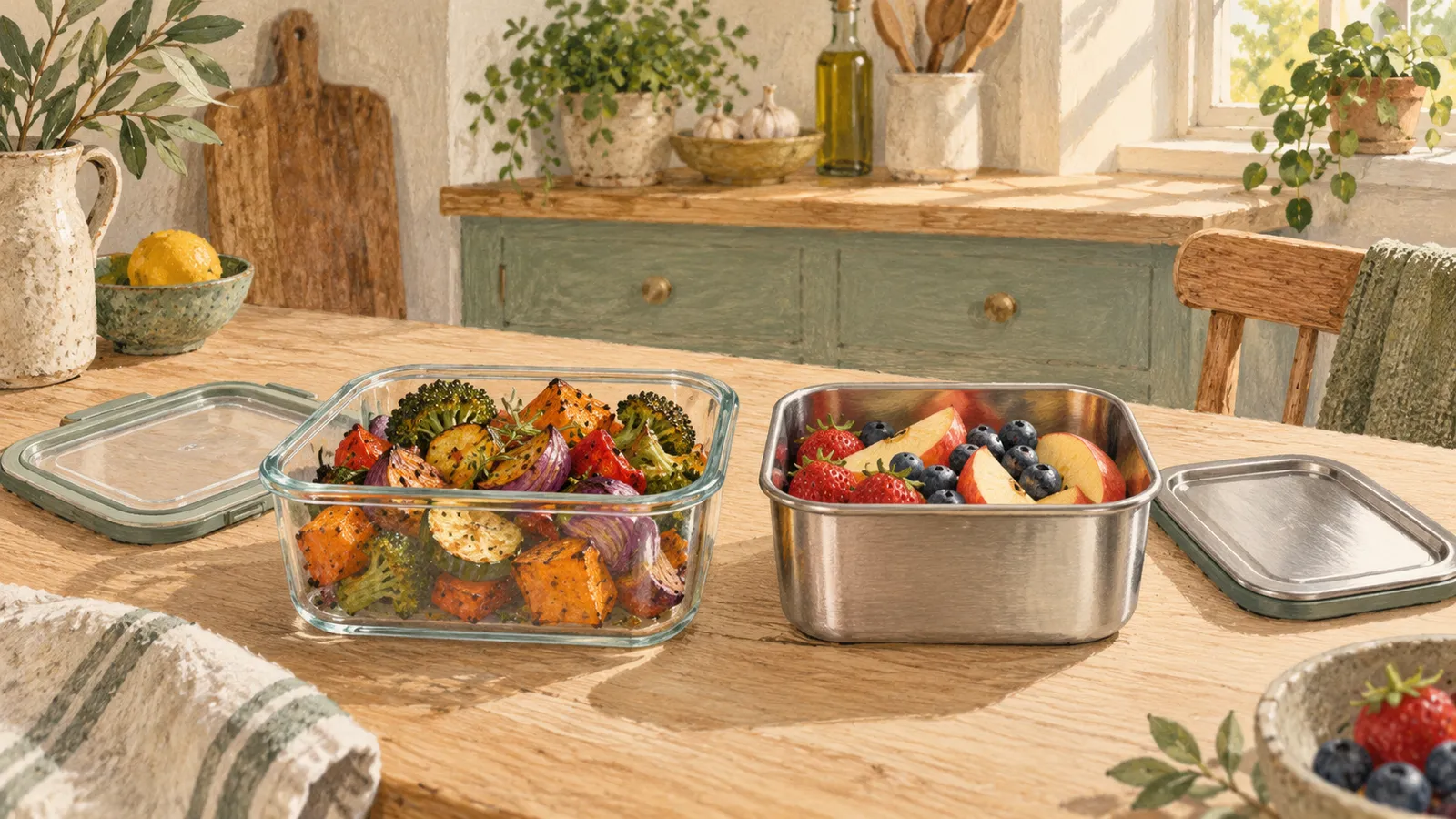
AI-generated editorial illustration; a conceptual scene, not a product photograph.
Glass containers suit food you want to see and reheat in a suitable vessel. For a compact lunch box you carry around, stainless steel offers impact resistance and may reduce weight. Check lids, seals and appliance instructions separately: the body material does not tell you whether a complete container is leakproof or safe to heat.
A mixed collection can be sensible. You might use glass for food stored and reheated at home and steel for a cold packed lunch. Start with the container you need most, whether that is a reheating dish or a box for carrying lunch.
A glass or steel body may come with a plastic lid, silicone seal, clip closure or valve. Those parts affect leaks, cleaning and heat limits. A “plastic-free” preference requires checking every component, not simply the main vessel.
Look at the shape and the space it uses. Two boxes of equal stated capacity may stack very differently because one has projecting clips or a thick rim. Measure the footprint including the lid, then try the outline on the intended fridge shelf.
If you are reducing a cupboard full of mismatched pieces, begin with our container and lid organization guide. A reliable matching lid is often more useful than a new material.
| Decision | Glass | Stainless steel |
|---|---|---|
| Seeing food at a glance | Usually easy through a clear body | Opaque body needs a label or suitable transparent lid |
| Carrying a lunch | Can be substantial and breakable | Often lighter for comparable capacity; check actual weight |
| Accidental impact | Can chip or break | Can dent; inspect any damage affecting fit or use |
| Microwave use | Only if the exact vessel and lid instructions permit | Ordinary steel should not be assumed suitable; model-specific exceptions exist |
| Oven use | Depends on glass type, design and instructions | Depends on body, finish, fittings and lid instructions |
| Leaks | Seal and closure determine performance | Seal and closure determine performance |
| Empty storage | Some sets nest; others do not | Some sets nest; others do not |
We have not tested these containers. Check the manufacturer’s specifications for weight, appliance use and leaks before choosing a model.
Clear glass lets you identify leftovers without opening the lid. That can help when several similar boxes share a shelf. It also allows a simple visual check of quantity before planning a meal, though appearance cannot establish food safety.
Choose a size you can lift when full. A large glass dish carrying soup may be awkward to move into a low fridge shelf. Smaller portions can be easier to handle and reheat, as long as they suit the food and your storage space.
Pyrex’s official FAQ sets out its product-use restrictions, including avoiding sudden temperature changes and direct heat uses not permitted by the instructions. Do not generalize those directions to all glass, or assume that every glass storage box is ovenware.
Inspect rims, corners and the base for damage. Follow replacement guidance for chipped or cracked glass. Place hot permitted ovenware on the surface specified by its manufacturer, using appropriate hand protection. A container’s ability to hold chilled food does not establish how it should move between freezer and oven.
Pyrex’s FAQ has overlapping entries with different cold-to-hot directions. Before moving a chilled dish to the oven, use the instructions supplied with your exact vessel and ask Pyrex to clarify anything unclear.
A steel box can make sense when you carry lunch in a bag and want to avoid a heavy breakable body. Compare actual empty weights for similar usable capacities. A large steel lunch set with several accessories may not be lighter than a small glass box.
An opaque body makes labels more important. Write the contents and preparation date where you can see them without unstacking every box. A semi-transparent lid may help, but it can have different cleaning or heating limits from the body.
Watch how the lid closes when the box is full. A seal obstructed by food or a clip forced over an overfilled box can undermine the closure. Keep the rim clean and follow the stated filling and locking instructions.
Do not put a normal steel food box into a microwave just because another steel model is advertised for that use. Some products are specially designed and sold with detailed microwave instructions. Their permitted use depends on the complete design and the appliance conditions.
For example, Black+Blum’s Meal Prep Box Set is marketed as microwave-compatible and lists restrictions including wattage, heating intervals, venting and avoiding combination ovens. These are manufacturer claims and instructions; we have not independently tested the boxes.
Before using such a product, read both the container and microwave instructions. If they conflict, do not proceed on the strength of a general shopping-page label. Glass also needs verification: lids may require removal or venting and may have a different limit from the vessel.
Keep a known suitable dish available for reheating if needed. Transferring lunch to that dish can be simpler than buying a container specifically to combine transport and heating.
A body can be impermeable while its lid leaks. For soup or dressing in a work bag, look for a specific leakproof claim for the complete product, the permitted foods and the required closing method. A loose resting lid is not equivalent to a sealed one.
Test a new container with water over the sink before packing food, following its instructions. This can reveal an incorrectly fitted seal or closure. Continue to follow the manufacturer’s limits even if the water stays inside. Keep a leaking box for dry foods only if it remains otherwise suitable.
Check whether replacement lids and seals are available in your market. A replacement seal may let you keep using a sound body. If the seal cannot be cleaned properly or the body is damaged, follow the manufacturer’s advice.
Plan when you will eat the leftovers before choosing which box holds them. The FDA’s refrigeration guidance recommends a fridge at 4°C (40°F) or below, avoiding overpacking and prompt storage of perishable food. Use food-specific dates and local leftover guidance as well.
Divide a cooked batch into suitable portions and freeze later meals after appropriate cooling. Label the original prep date; moving food to a different box does not restart the clock. Our small-fridge meal plan shows that process in a practical menu.
Write down the intended job: cold lunch, soup transport, freezer portion or food reheated at home. Record the shelf space, bag space, heating method and lid requirements. Then choose one container and use it before buying a set.
For a hypothetical household, two glass containers for dinners at home and one steel cold-lunch box might be enough. Another household using a microwave at work may choose a different arrangement. For the wider range of kitchen materials, see the non-toxic kitchen guide.
Sources describe their own scope and limitations. Read our sourcing policy.
Read more from the Non-Toxic Product Curation pillar.
Non-Toxic
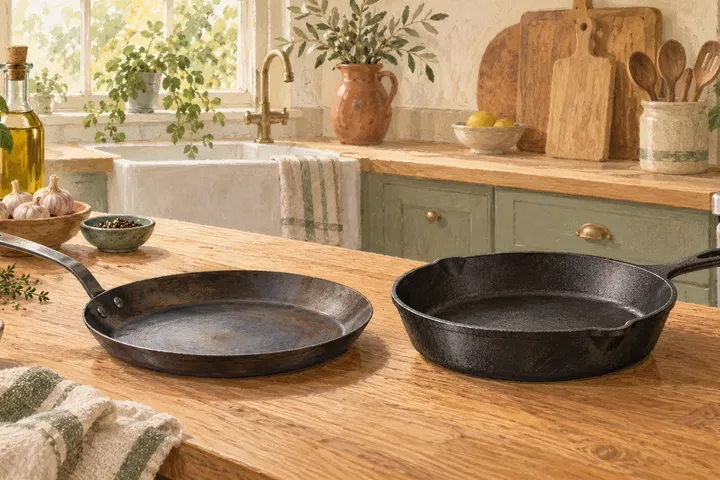
Choose between seasoned carbon steel and cast iron by actual weight, shape, cooking habits and maintenance.
7 min read
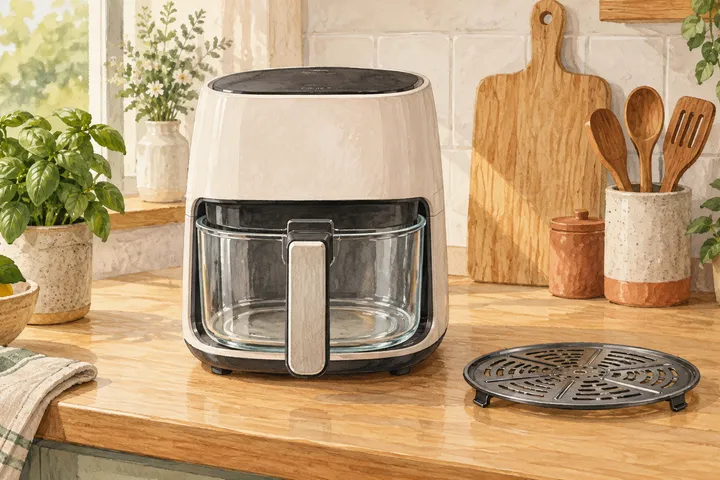
Check exact air-fryer models and food-contact parts, with a researched US shortlist and questions to clarify PFAS-free claims.
6 min read
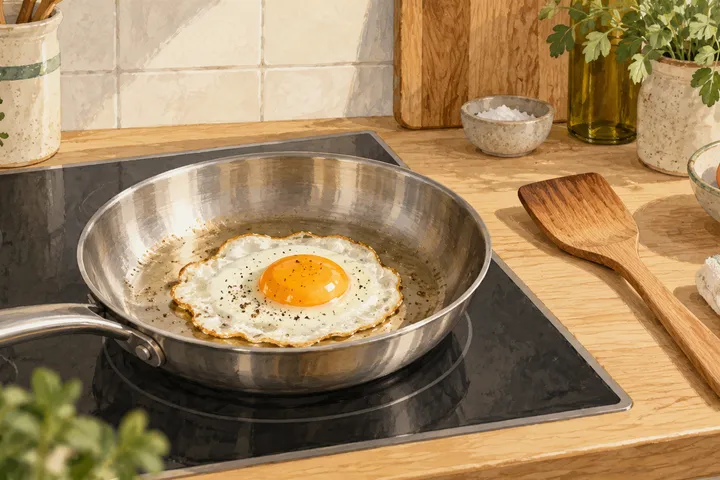
Use gentle heat, suitable fat and patient timing for stainless steel eggs, with a practical troubleshooting table.
6 min read