
Carbon Steel vs Cast Iron
Choose between seasoned carbon steel and cast iron by actual weight, shape, cooking habits and maintenance.
7 min read
Use gentle heat, suitable fat and patient timing for stainless steel eggs, with a practical troubleshooting table.
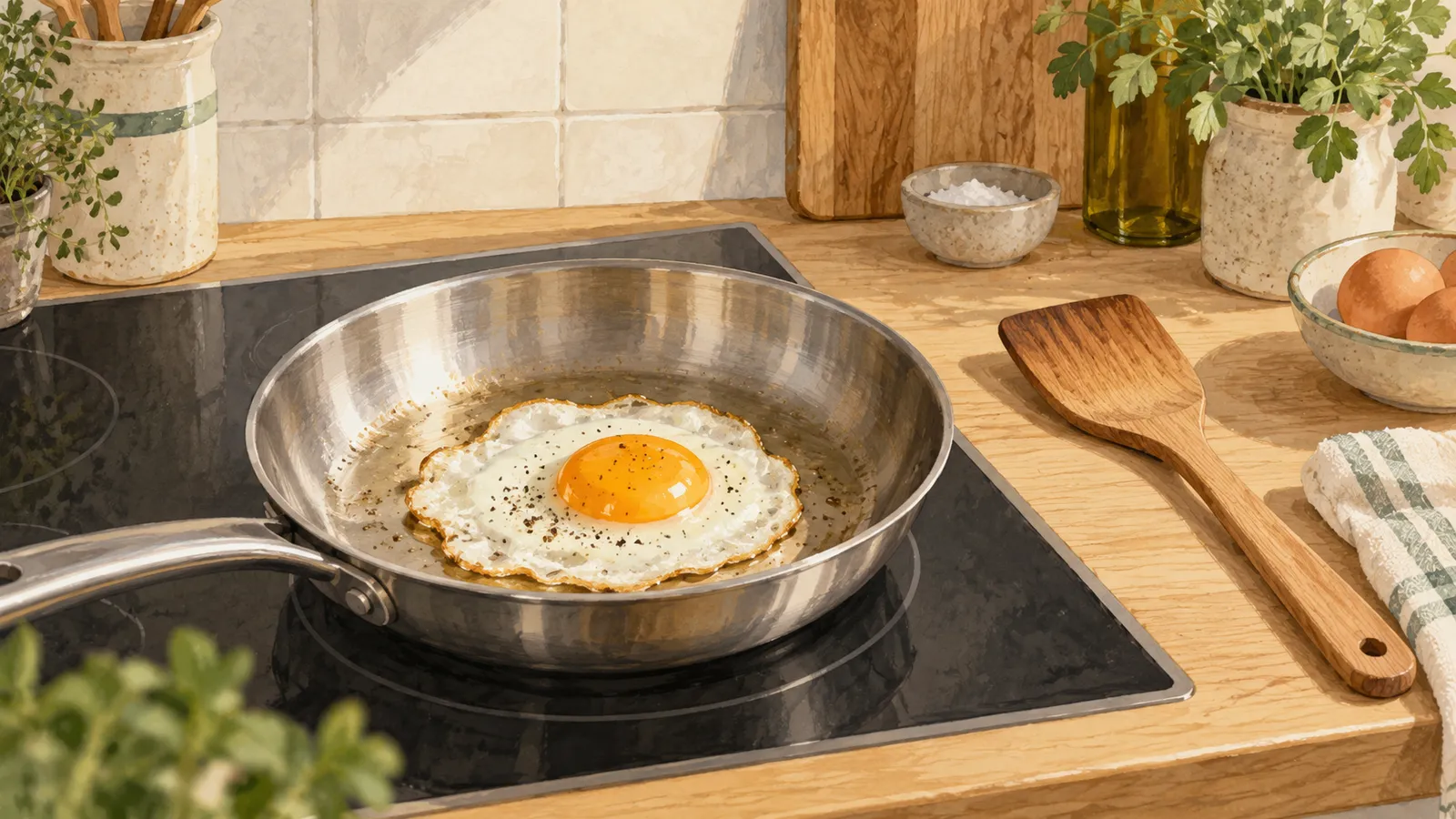
AI-generated editorial illustration; a conceptual scene, not a product photograph.
To cook eggs in stainless steel with less sticking, use a clean pan, moderate preheating, enough fat to coat the cooking area and gentle heat once the eggs go in. Let fried eggs set before sliding a thin turner underneath. For scrambled eggs, stir as the curds form rather than letting a thin layer bake onto the surface.
There is no single burner setting or preheating time that works for every pan. Start with one egg, observe what happens and adjust one variable at a time. Smoke is a sign to stop and cool the pan, not a necessary stage of preparation.
Have the egg, fat, turner and plate ready. Crack the egg into a small bowl so you can add it without searching for a shell fragment over a hot pan. For scrambled eggs, beat them first and keep the bowl beside the hob.
Use a pan that fits the burner. A broad pan on a tiny heat source may warm unevenly, while a pan on an oversized gas flame can expose handles and sides to excessive heat. Follow the pan and hob instructions, including any limits on empty preheating.
Check that the cooking surface is clean. A thin layer of old residue can affect the next breakfast even when the pan looks roughly washed. Let the pan dry before heating. Keep towels, loose packaging and other items clear of the cooking surface.
If you are choosing your first pan, our stainless steel versus ceramic comparison explains the ownership tradeoffs. A small stainless frying pan is enough for the first few attempts.
Begin with a moderate or medium-low setting, following your manufacturer’s advice. Give the pan time to warm rather than using an induction boost function to rush the process. Thick layered pans and lightweight pans respond differently, so a fixed two-minute instruction can be misleading.
All-Clad’s egg guidance recommends controlled heat and fat. GreenPan’s stainless steel egg instructions likewise describe preheating and lowering the heat for the eggs. Use these manufacturer techniques as a starting point, then adjust for your pan and burner.
Add enough butter or oil to cover the part of the pan where the egg will sit. A dry patch directly under the egg defeats the purpose. For a small trial, begin with about 5 ml (1 teaspoon) of fat in a suitably sized pan, then adjust to its diameter and your recipe. The amount should leave the cooking area evenly coated.
Butter should melt and gently foam without immediately turning dark. Oil should spread easily without smoking. If the fat burns or smokes, remove the pan from the heat, let it cool safely and start again with fresh fat. Do not pour cold water into a hot pan to reset it.
A water drop that beads and skates across the pan is often used as a preheating cue. It does not establish the best egg-cooking temperature for every pan. A pan hot enough to produce that effect may need to cool before a delicate egg is added.
Do not keep raising the heat simply because a particular water effect has not appeared. Avoid adding water to hot oil, and do not use a dramatic water test as a substitute for following the cookware instructions. Watching how fresh fat behaves at a modest setting is a simpler starting point for this breakfast.
Slide the egg from the bowl into the coated cooking area. You want a gentle sizzle rather than violent spattering. Lower the heat if the edges brown rapidly while the white above remains unset.
Leave the egg alone while the underside firms. Moving it immediately can tear the white and spread it across uncovered metal. When it is ready to move, ease a thin turner under the edge and continue slowly. If it resists, give it a little more time at gentle heat instead of scraping forcefully.
For a fully cooked top, follow a suitable recipe using a lid or careful turning. Keep your face and hands away from escaping steam when lifting a lid. Keep cooking until the eggs meet the food-safety guidance applicable to you.
In the US, the FDA advises cooking eggs until both white and yolk are firm and scrambled eggs are not runny. It recommends pasteurized eggs or egg products for preparations served raw or undercooked. Follow local advice and take particular care when cooking for people at greater risk from foodborne illness.
Add beaten eggs to the fat-coated pan and allow a little curd to form, then move the mixture with a suitable spatula. Keep bringing the setting egg inward and exposing uncooked mixture to the pan. Use gentle heat so you have time to respond.
A very thin layer left untouched can dry onto the steel. At the other extreme, frantic stirring before any curd has formed can spread egg over a large area without giving it a chance to set. Aim for steady movement as the mixture cooks.
Take the pan off the burner if the curds are forming faster than you can move them. Residual heat still matters, especially in a heavy pan. Plate promptly once the eggs are cooked appropriately rather than leaving them on the hot surface while you make toast.
| What happened | Possible explanation | What to change next time |
|---|---|---|
| Dark edges immediately, unset white above | Pan too hot for the egg | Start lower; let overheated cookware cool |
| Egg sticks in isolated patches | Uneven fat coverage or residue | Clean thoroughly; coat the cooking area evenly |
| White tears when the turner goes underneath | Moved too early, or turner too blunt | Let it set; ease a thin suitable turner under slowly |
| Scrambled egg leaves a dry film | Heat too high or mixture left still too long | Lower heat; move curds as they form |
| First egg works, second burns | Pan continued heating between batches | Reduce heat; refresh fat as needed |
| Fat smokes before eggs are added | Excessive heat | Stop, cool safely and restart; do not add eggs to smoking fat |
More than one problem can produce the same result. Record the pan, burner setting, fat and result, then change one thing on the next attempt so you can tell whether it helped.
Let the cookware cool according to its instructions, then wash or soak it as permitted. Loosen attached food gently rather than attacking a hot pan with cold water. Use a cleaner compatible with the material and finish.
If you prefer a seasoned surface, our carbon steel and cast iron comparison covers their maintenance needs. The broader cookware guide can help you keep a few materials for the jobs each handles comfortably.
Sources describe their own scope and limitations. Read our sourcing policy.
Read more from the Non-Toxic Product Curation pillar.
Non-Toxic
Choose between seasoned carbon steel and cast iron by actual weight, shape, cooking habits and maintenance.
7 min read
Compare food-container bodies, lids, leaks, carrying weight and exact appliance compatibility before buying a set.
7 min read
Check exact air-fryer models and food-contact parts, with a researched US shortlist and questions to clarify PFAS-free claims.
6 min read