
Glass vs Stainless Steel Food Containers
Compare food-container bodies, lids, leaks, carrying weight and exact appliance compatibility before buying a set.
7 min read
Choose between seasoned carbon steel and cast iron by actual weight, shape, cooking habits and maintenance.
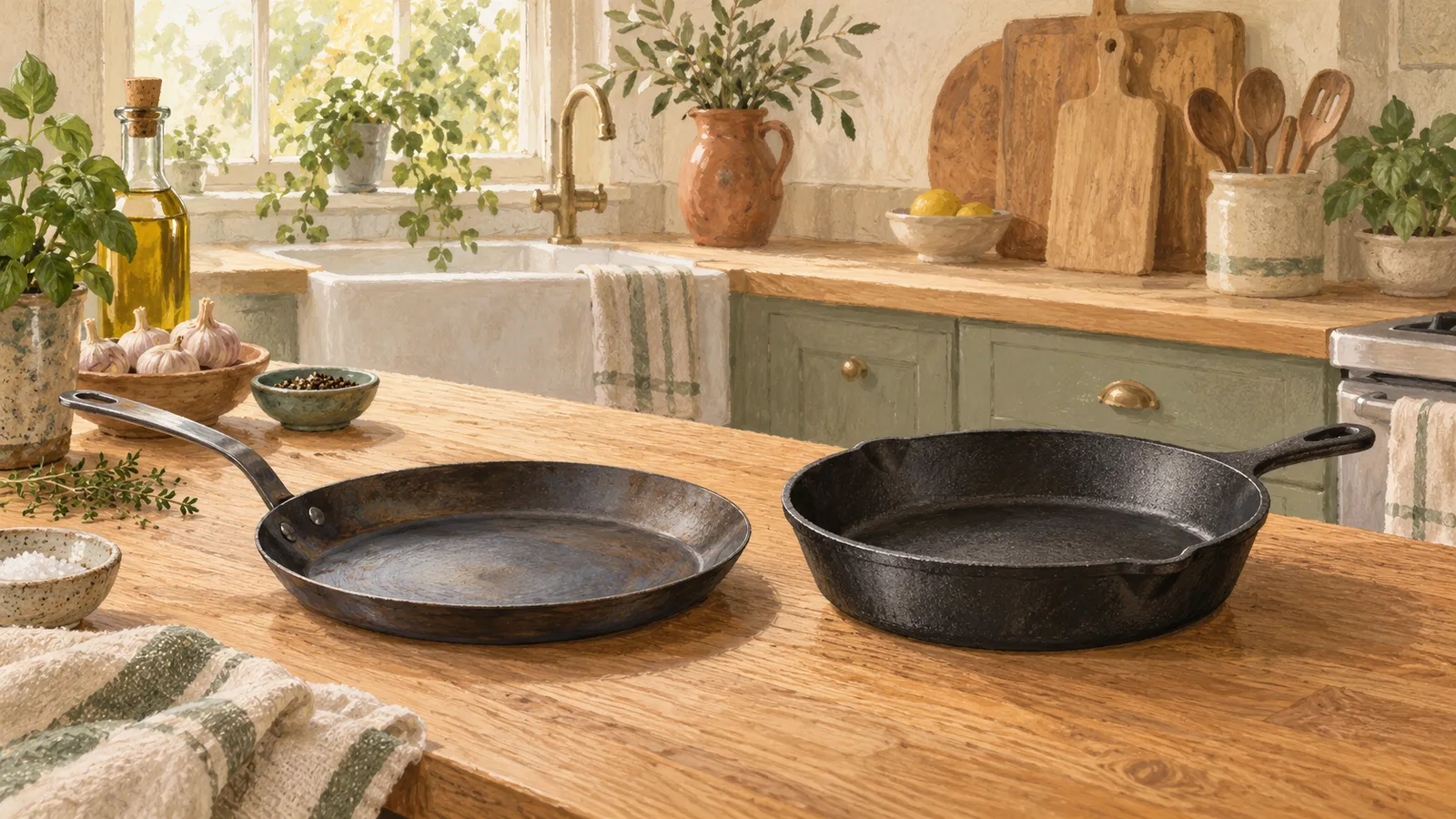
AI-generated editorial illustration; a conceptual scene, not a product photograph.
Carbon steel is often thinner and easier to move than a comparable traditional cast-iron skillet. Cast iron suits cooks who prefer a substantial pan for steady frying, roasting and cooking that benefits from stored heat. Compare the actual pans’ weights and shapes before deciding; neither material guarantees a comfortable handle or a light pan.
Both need care of their seasoning and protection from prolonged moisture. If you want a pan for frequent acidic sauces with little maintenance, uncoated stainless steel may be a better first choice.
The comparison covers uncoated, seasoned carbon steel and cast iron. Enamelled cast iron has a different food-contact surface and care routine. Do not apply a bare-iron seasoning method to an enamelled pot unless its manufacturer specifically instructs you to do so.
Both materials contain iron and carbon, but the pan’s thickness, diameter and handle affect daily use as much as the category. A thick carbon-steel pan may still be heavy. A small cast-iron skillet can be easier to manage than a very wide steel pan.
Lodge’s comparison describes its carbon-steel pans as thinner and quicker to heat and cool than its traditional cast-iron pieces. Those differences describe Lodge’s ranges; check thickness and construction when comparing other brands.
If you also need a saucepan, compare the other materials in the cookware guide. You may want a seasoned skillet for frying and a different surface for sauces.
Pick up a pan if you can. Allow for the extra weight of food when judging whether you can handle it comfortably. Check whether you can grip it securely, whether a helper handle is useful and whether you can wash it comfortably in your sink.
Long handles can make a carbon-steel pan convenient for moving or tossing food, but they require more storage space. Short cast-iron handles may fit inside an oven more easily. Neither arrangement makes a handle safe to touch during cooking; use appropriate protection and follow the instructions.
Measure the full length for your cabinet and oven. Compare the flat cooking area as well as the top diameter. Sloping sides can make two nominally similar pans hold different amounts of food in contact with the base.
| Your regular use | Carbon steel may suit it when… | Cast iron may suit it when… |
|---|---|---|
| Quick sautéed vegetables | You want to move the pan and respond to heat changes | You prefer leaving a sturdy skillet on the hob |
| Pan-frying | A manageable weight matters most | Stored heat and a substantial body are useful |
| Oven finishing | The exact handle and model allow the required oven use | The whole skillet fits and its instructions permit it |
| Eggs or delicate foods | You are willing to build seasoning and learn gentle heat control | You are willing to do the same in a heavier pan |
| Long acidic sauces | A different material may be more convenient | A different material may be more convenient |
| Very limited storage | A compact shape and handle actually fit | A short handle and smaller skillet actually fit |
This comparison draws on product guidance; we have not tested the pans ourselves. If you cook several of these foods, choose the feature that removes your most frequent inconvenience.
Seasoning forms when a thin layer of oil is treated by heat on the pan. Clean away food residue after cooking. Lodge’s current care guide describes washing, drying and applying oil as its basic routine for seasoned cast iron.
Some pans arrive seasoned. Others require initial preparation. De Buyer’s MINERAL B information describes a protective beeswax finish and seasoning before first use. Do not assume that every carbon-steel pan can go straight from its packaging to breakfast.
Follow the exact instructions for removing any protective finish and seasoning the product. Oven seasoning methods may be unsuitable for a pan with a coated or otherwise temperature-limited handle. A general internet routine is not a substitute for the permitted method.
Expect the appearance of a seasoned surface to change. A patchy colour is not the same thing as structural damage. If the surface becomes sticky, rusty or heavily crusted, use the manufacturer’s maintenance guidance instead of adding more thick layers of oil over the problem.
Both types benefit from controlled heating. Do not use maximum induction power simply because a pan is made of uncoated metal. Match the cooking area to a suitable burner and follow the cookware’s instructions to reduce uneven heating and possible deformation.
A substantial skillet holds heat after the burner is lowered. That can help during frying, but it can also overcook delicate food if you wait too long to respond. A thinner pan generally changes temperature more readily, which rewards attention to the controls.
Learn one familiar meal first. Cook it with moderate settings, notice how the pan responds and adjust the next attempt. If the fat starts smoking, stop and adjust the heat before continuing.
For eggs, seasoning works alongside heat, fat and timing. The stainless steel egg guide explains those variables on another uncoated surface. Use it to understand the adjustments, then follow your seasoned pan’s instructions.
Acidic ingredients can affect the seasoning of bare iron and steel. For frequent tomato sauces or long acidic cooking, consider another suitable pan. A brief addition of an acidic ingredient and a long simmer are different uses, so consult the instructions rather than treating every contact as identical.
Cleaning advice also varies between manufacturers and ranges. Some permit a little mild washing-up liquid; others specify another routine for their steel products. Follow the pan’s current care instructions, clean food residue properly and dry promptly. Do not leave an uncoated seasoned pan soaking indefinitely.
After washing, use the permitted drying and oiling method. Store it dry, with any lid arranged so moisture is not trapped. If pans are nested, ensure they cannot scrape or knock each other and that you can lift the stack safely.
One cook makes quick vegetables most evenings and finds a large cast-iron skillet difficult to lift. A suitably sized carbon-steel pan may be worth considering because handling is the main problem. They should still check its actual weight; the material name alone does not solve it.
Another cook usually makes a pan-fried dinner and finishes it in the oven. A compact cast-iron skillet may suit that routine if the weight, oven fit and instructions work.
If drying and oiling a pan after washing feels like too much work, compare the care routines in stainless steel versus ceramic cookware. Choose the one you can comfortably keep up with after dinner.
Record the weight, overall length, cooking-surface size, hob compatibility, oven restrictions, initial seasoning requirements and return policy. Ask whether the handle and any included cover have different limits. If buying from an overseas listing, check warranty support in your own market.
Choose one pan for the meals you cook most often. Check that you can handle and store it comfortably and keep up with its care after washing.
Sources describe their own scope and limitations. Read our sourcing policy.
Read more from the Non-Toxic Product Curation pillar.
Non-Toxic
Compare food-container bodies, lids, leaks, carrying weight and exact appliance compatibility before buying a set.
7 min read
Check exact air-fryer models and food-contact parts, with a researched US shortlist and questions to clarify PFAS-free claims.
6 min read
Use gentle heat, suitable fat and patient timing for stainless steel eggs, with a practical troubleshooting table.
6 min read