
A Simple Evening Kitchen Reset
Choose a two-, ten- or twenty-minute evening kitchen routine that handles food safely and leaves a usable surface for tomorrow.
6 min read
Share ingredients, vary sauces and meal formats, and plan fridge and freezer portions for two people.
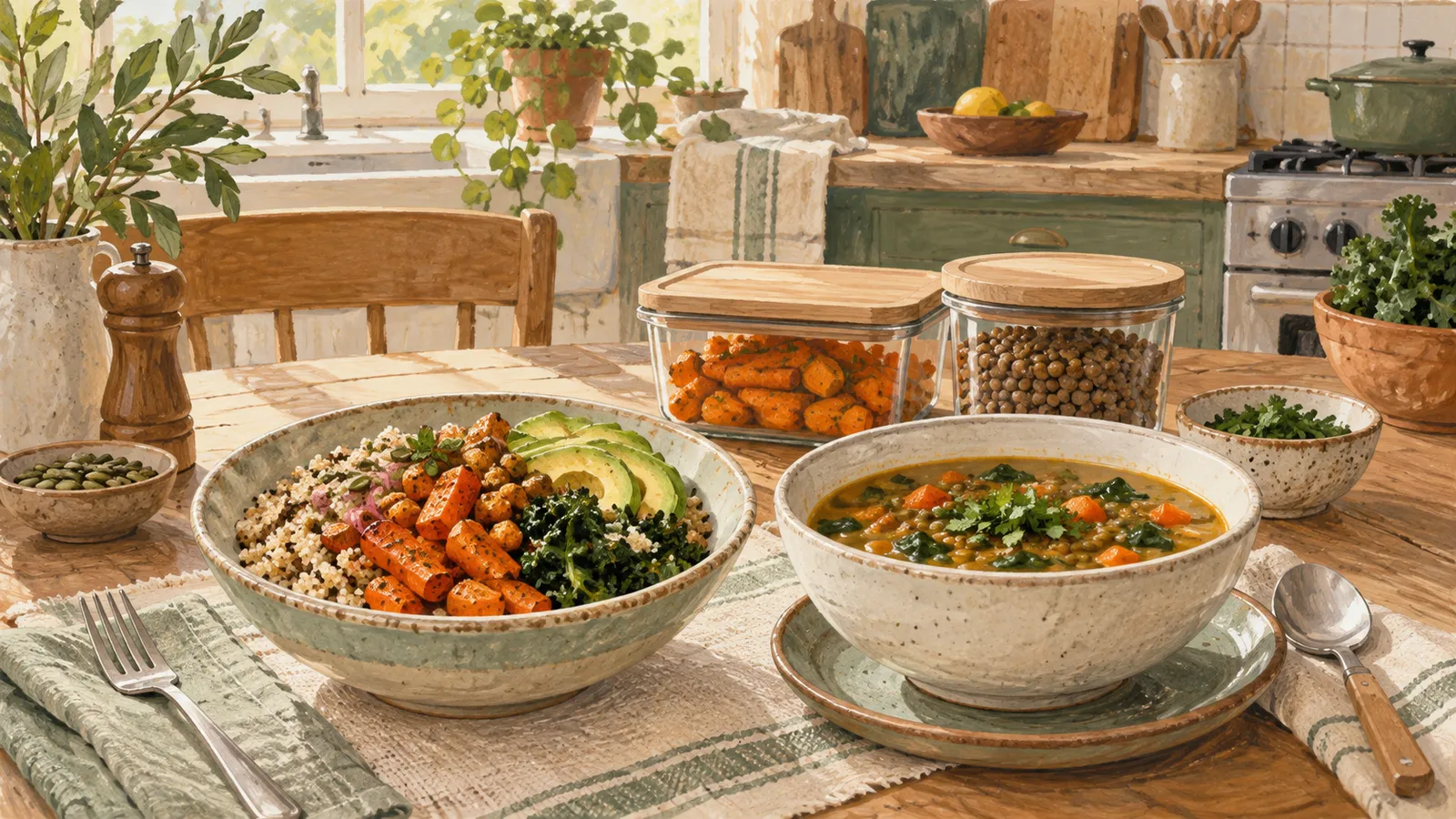
AI-generated editorial illustration; a conceptual scene, not a product photograph.
For two people, prep a small cooked base and one or two vegetables, then keep sauces separate. You can finish one portion with lemon and herbs, make another into soup and pack a third into a wrap.
Agree on how many meals you both need before shopping. Plan refrigeration for the near-term portions and freeze later cooked portions on prep day. Label those freezer portions so either person can find a dinner when plans change.
Write down three dinners you both like and look for shared ingredients. You might both enjoy beans but prefer different sauces, or both eat roasted vegetables while choosing different proteins.
Separate a true restriction from a finishing preference. An allergy needs suitable ingredient selection and careful avoidance of cross-contact; serving a garnish separately is not a complete allergy plan. A dislike of chilli is easier to handle by keeping the shared base mild and adding chilli at the table.
Check your calendar together. If one person needs three packed lunches and the other eats lunch elsewhere, do not automatically double every lunch recipe. The University of Minnesota’s meal-planning advice emphasizes checking supplies and schedules before creating a shopping list.
A pot of cooked lentils can become soup, a warm grain bowl or a filling for a wrap. Roasted carrots can sit beside a fresh dinner or be added to that bowl. A dressing can bring those ingredients together, but storing it separately preserves your choices.
Avoid coating the whole batch in a strongly flavoured sauce if variety matters to you. It is easier to add cumin to one portion and lemon and herbs to another than to undo a sauce already mixed through every container.
This is also why one neutral component can be more useful than three partly finished recipes. The tradeoff is a little work each evening: warming, assembling or cooking one fresh element. If evenings are extremely busy, fully cooked individual portions may be a better fit. Our ingredient prep versus meal prep guide helps you choose between those approaches.
This hypothetical menu starts with Sunday evening prep and a short refrigerated window. The lentils and carrots become bowls, wraps and soup. Use a recipe for the lentil base and roast the carrots according to appropriate cooking instructions. Adjust quantities to your appetites.
| Meal | Shared components | Person one can finish with | Person two can finish with |
|---|---|---|---|
| Monday dinner | Lentils, roasted carrots, fresh bread | Lemon and herbs | Yoghurt and a spice blend |
| Tuesday lunch, within 48 hours of prep | Refrigerated lentil and carrot portions | Wrap with washed greens | Warm soup made with stock |
| Wednesday dinner | Freshly cooked vegetables; pantry beans | Beans on toast | Beans in a tortilla |
| Thursday dinner | Sunday portions frozen on prep day | Warm bowl with a fresh garnish | Lentil soup with bread |
| Friday dinner | A fresh or pantry-based meal | Decide together on the day | Decide together on the day |
The Sunday ingredients cover a few meals, not every meal until Friday. That leaves room for different appetites, social plans and fresh cooking. Freeze Thursday’s cooked portions individually on Sunday; transfer them to the fridge for safe thawing before use.
If both of you want complete meals ready to heat, freeze two differently finished dinners instead. Choose that option for evenings when neither of you wants to assemble dinner.
Write the destination of each cooked portion on a scrap of paper. For example: two for Monday dinner, two smaller lunch portions for Tuesday and two freezer portions for Thursday. Compare that list with the actual recipe yield. If the recipe makes more than you need, reduce it where appropriate or choose a different recipe.
Do not assume equal portions simply because there are two people. Use the serving sizes that normally satisfy each of you. A container can be labelled with a name when that prevents confusion, particularly if ingredients differ.
Set the containers out before starting. This shows whether you have room to cool, refrigerate and freeze the intended batch. Leave appliance vents clear and follow the fridge manufacturer’s loading instructions. You may discover that one base plus fresh ingredients fits better than six assembled dinners.
For material and lid decisions, see our food-container comparison. Choose boxes for the meals you have planned: a lunch container that travels well, for instance, and smaller portions that fit your freezer.
In a small kitchen, two people do not need to chop side by side. One can check dates, portion dry ingredients and prepare labels while the other uses the main cutting surface. Then swap to washing and storing as cooking finishes.
Agree on who handles the final clean-up and who puts the freezer portions away, so neither person ends up finishing both jobs alone.
Keep the sink available. Filling it with dirty dishes early can make handwashing and cleaning tools awkward. Use a small temporary area for washing-up that does not crowd the hob or become a place for ready-to-eat food.
In the US, USDA leftover guidance generally gives cooked leftovers three to four refrigerated days and advises reheating to 74°C (165°F). That window depends on safe cooking, prompt chilling and appropriate cold storage. Divide the batch and put it away promptly.
For England, Northern Ireland and Wales, the Food Standards Agency advises eating leftovers within 48 hours or freezing them, and reheating only once. This menu uses the shorter fridge schedule. Follow stricter instructions for particular foods and the guidance applicable where you live.
Label the shared base and each frozen meal with contents and date. Thaw in the fridge according to local guidance. Reheat only the amount you intend to eat, so a shared batch does not go through repeated warming and cooling while the two of you eat at different times.
At the end of the week, ask which meal felt useful and which felt like an obligation. If bowls were welcome but wraps were left behind, change the combination. If one person regularly comes home late, an individual freezer meal might be more useful than an ingredient box.
Keep one dependable combination and change the fresh finish as you need to. With the shared base already cooked and stored, the evening work can be as small as warming a portion and adding herbs or toast. The mindful cooking guide offers ways to enjoy that time even after a tiring day.
Sources describe their own scope and limitations. Read our sourcing policy.
Read more from the Mindful Cooking & Eating pillar.
Mindful

Choose a two-, ten- or twenty-minute evening kitchen routine that handles food safely and leaves a usable surface for tomorrow.
6 min read
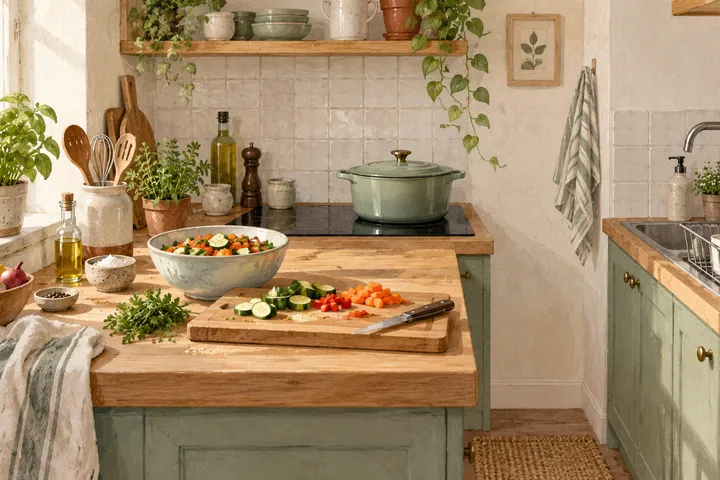
Sequence preparation, cooking, cooling and clean-up around one working surface and limited equipment.
7 min read
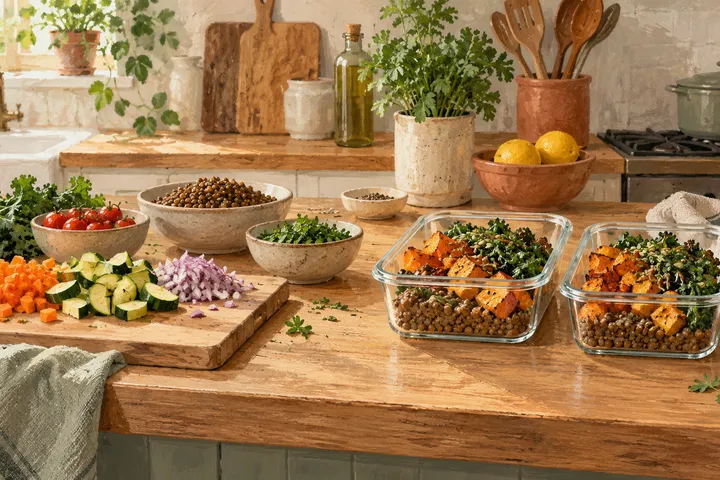
Compare prepared ingredients with complete meals through worked examples, realistic remaining tasks and short storage schedules.
6 min read