
A Japandi Kitchen Makeover on a Budget
Prioritize useful changes, plan a realistic budget and distinguish removable updates from permanent kitchen alterations.
6 min read
Compare Japandi backsplash materials, grout and cleaning, with sample combinations for oak, walnut and painted cabinets.
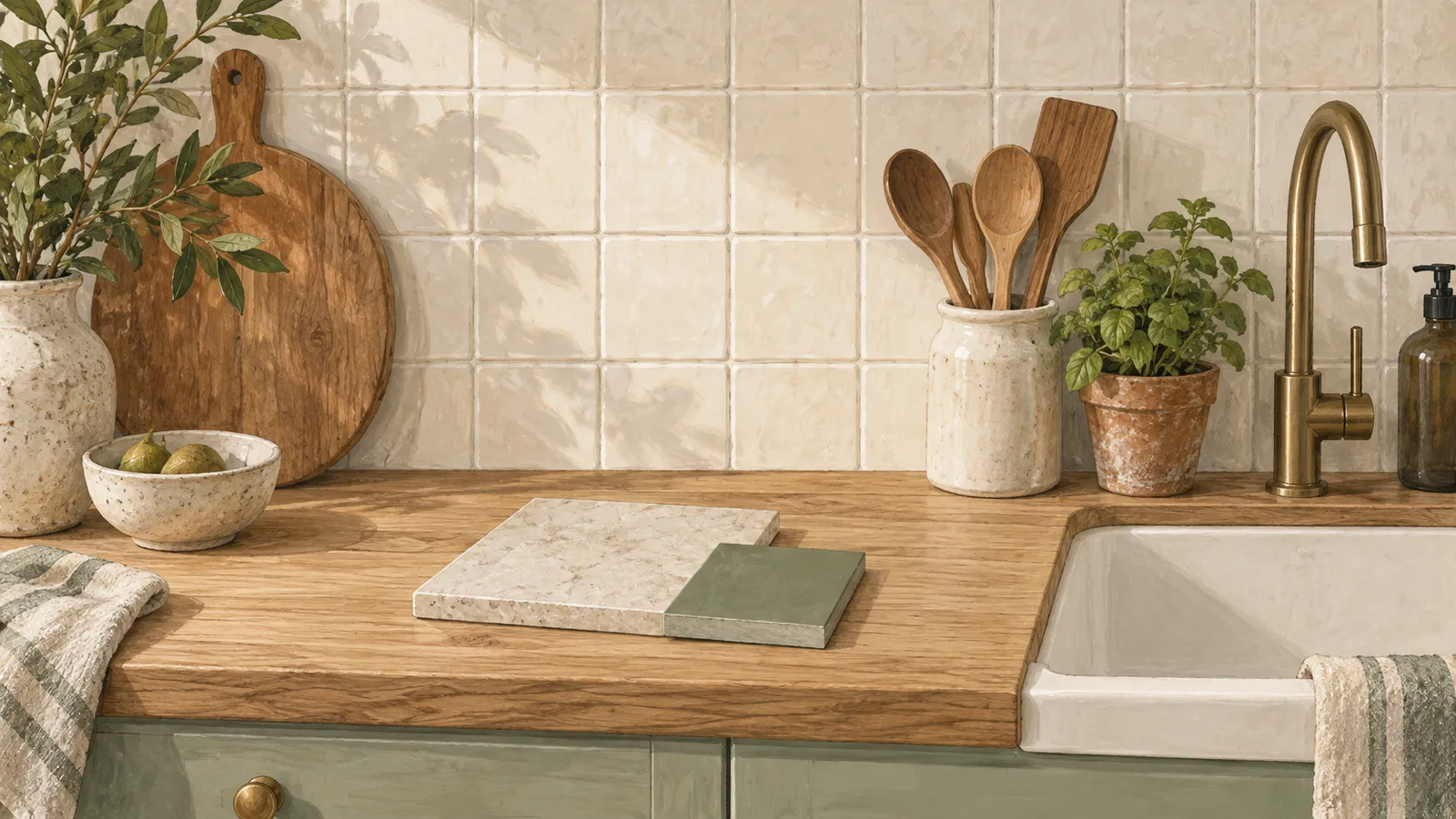
AI-generated editorial illustration; a conceptual scene, not a product photograph.
For a Japandi kitchen backsplash, begin with a quiet material that works with your cabinets and is manageable to clean: warm neutral glazed tile, restrained porcelain or a carefully selected slab are useful starting points. If the wood grain or countertop is already strongly patterned, keep the backsplash simpler.
Choose the actual material, finish and installation system before deciding that a look is easy to maintain. A pale handmade-looking tile can be glazed ceramic or porous stone, with different care needs. Compare your sample with the materials in the Japandi kitchen design guide, then check how you would clean it after cooking.
| Option | Visual character | Practical advantage | Check before choosing |
|---|---|---|---|
| Glazed ceramic tile | Plain, softly varied or handmade-looking | Many restrained finishes and formats | Surface texture, grout and wall-use suitability |
| Porcelain tile | Consistent or stone-like | Broad format choices | Exact finish, cutting and installation needs |
| Natural stone tile | Individual veining and variation | A strong material connection | Acid sensitivity, sealing advice and cleaning |
| Slab backsplash | Large continuous visual field | Fewer grout joints across the main face | Seams, edges, fabrication and material care |
| Glass or metal tile | Reflective or finely detailed | Can introduce a small accent | Glare, cleaning marks and compatibility |
Daltile’s wall-tile guide identifies ceramic, porcelain, glass, stone and slab options for backsplashes. For any of those options, check the exact finish’s cleaning instructions and its suitability beside your appliance.
Light oak and a warm white backsplash can form a calm pairing without making every surface the same colour. Compare the tile with the actual wood and countertop. A white that appears creamy on its own can look yellow beside a cooler counter.
Choose a modest amount of variation if the oak already has visible grain. A softly uneven glaze can add interest without a strong contrast pattern. Test how its surface wipes clean, using the permitted cleaner on a sample if the supplier allows it.
Try grout close in value to the tile for a quieter field. A dark contrasting grid may become the strongest pattern in the room, especially with small tiles. That may be a deliberate choice, but it is different from a subdued wall behind the cabinets.
Stone-look porcelain can provide a pale, veined appearance without being the same material as the stone it depicts. Check the exact product’s cleaning instructions, finish and suitability for the intended wall application.
Choose a sample showing the range of pattern rather than one unusually plain piece. A small sample may hide a repeating dramatic vein that dominates the finished wall. Ask to see several tiles or a full slab image, with scale and layout information.
If selecting real stone, identify the stone rather than relying on “natural.” The Natural Stone Institute’s care guidance explains that calcareous stones are sensitive to acids and that sealing does not make stone stain-proof. It advises choosing cleaning and sealing practices for the actual stone and supplier’s instructions.
Do not use vinegar as a universal backsplash cleaner. A routine that works on one finish can damage another. If you prefer very simple cleaning, weigh the stone’s particular requirements before choosing it for the busiest splash zone.
A subdued green, clay or grey-beige backsplash can work when the remaining palette is restrained. Compare its undertone with the cabinet paint, wood and daylight rather than assuming that every sage green belongs with every oak finish.
For cream cabinets, a tile with slight tonal variation can keep the wall from looking flat. For green cabinets, you might use a warm neutral backsplash and let the cabinets carry the colour. Sample these combinations beside your own cabinets to see which colours you prefer.
Use the sampling worksheet in Japandi kitchen colours that work with wood before committing. Hold wall samples vertically, because a tile lying flat on the counter catches light differently from one on the wall.
Small tiles create more joints across a given area than larger formats. That affects both the visible pattern and the amount of grout to maintain. A large-format tile still has edges, corners and transitions that need a proper installation detail.
Ask the installer about the grout type, joint width, curing, cleaning and any sealing requirements. Do not request an unrealistically narrow joint to hide variation in a tile that needs a wider one. Let the tile and installation-product specifications govern the detail.
Daltile’s ceramic and porcelain care guide notes that neither sealed grout nor epoxy grout guarantees freedom from buildup or discoloration. Follow the grout manufacturer’s maintenance directions. Ask what regular cleaning the proposed grout will need, including behind the hob.
| Existing kitchen | Backsplash direction | Grout or seam approach | Sample question |
|---|---|---|---|
| Light oak fronts, plain pale counter | Warm white glazed ceramic | Similar-tone grout | Does the tile look too yellow beside the counter? |
| Cream painted fronts, walnut detail | Restrained pale stone-look porcelain | Low-contrast joints | Does the pattern overpower the darker wood? |
| Muted green fronts, oak shelves | Plain warm neutral tile or suitable slab | Quiet joints or planned slab seams | Does the evening light make the neutral look pink? |
Use these hypothetical combinations to shortlist samples, then check the installation details with your supplier. Bring samples of the cabinet, counter and tile together before choosing the grout. If one fixed surface is already strongly patterned, simplify the others.
The comparison of wood, painted or mixed Japandi cabinets can help if the cabinet finish is still undecided. Compare the major surfaces together before buying.
Look at sockets, window returns, extractor details and the place where the backsplash ends. An attractive tile can look awkward if the last column is a narrow sliver or its exposed edge has no agreed finish.
Ask for a layout showing cuts and termination points before installation. A slab needs its seams, fabrication and openings planned too. Compare how each option handles the sockets, returns and edges in your room before approving the layout.
Behind cooking appliances, follow appliance clearances and the requirements for the complete wall assembly. A tile’s material alone does not establish that an adhesive, backing or decorative panel is suitable for heat exposure. Do not use peel-and-stick products in an unapproved location simply because they are sold as kitchen decor.
Renters should obtain permission for alterations where required and consider retaining a sound existing backsplash. Cleaning it correctly and changing nearby removable details can be enough. Removing adhesive products can damage a surface, so “removable” still needs checking against the product and the wall.
Confirm wall-use suitability, the full pattern range, cleaner compatibility, grout requirements, edge details and the installation quote. Review the sample in daylight and under the kitchen lights, including reflections from the normal standing position.
Ask the supplier what remains unresolved before ordering. Keep the chosen sample beside the cabinets until the grout, edges and cleaning requirements are settled. Then order the complete installation together.
Sources describe their own scope and limitations. Read our sourcing policy.
Read more from the Japandi & Zen Design pillar.
Japandi
Prioritize useful changes, plan a realistic budget and distinguish removable updates from permanent kitchen alterations.
6 min read
Compare visible wood, painted and mixed kitchen cabinets by appearance, construction, care and repair options.
7 min read
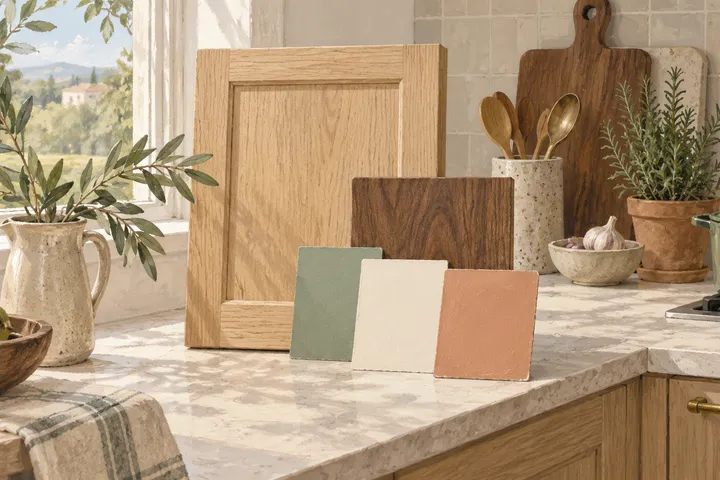
Read wood undertones, test daylight and evening light, and compare verified paint references with a sampling worksheet.
7 min read