How to Organize a Corner Kitchen Cabinet
Identify corner cabinet types, map easy-reach zones and compare simple layouts with correctly matched rotating or swing-out fittings.
6 min read
Compare stacking, upright racks, deep drawers and hanging rails to store everyday cookware comfortably in a small kitchen.
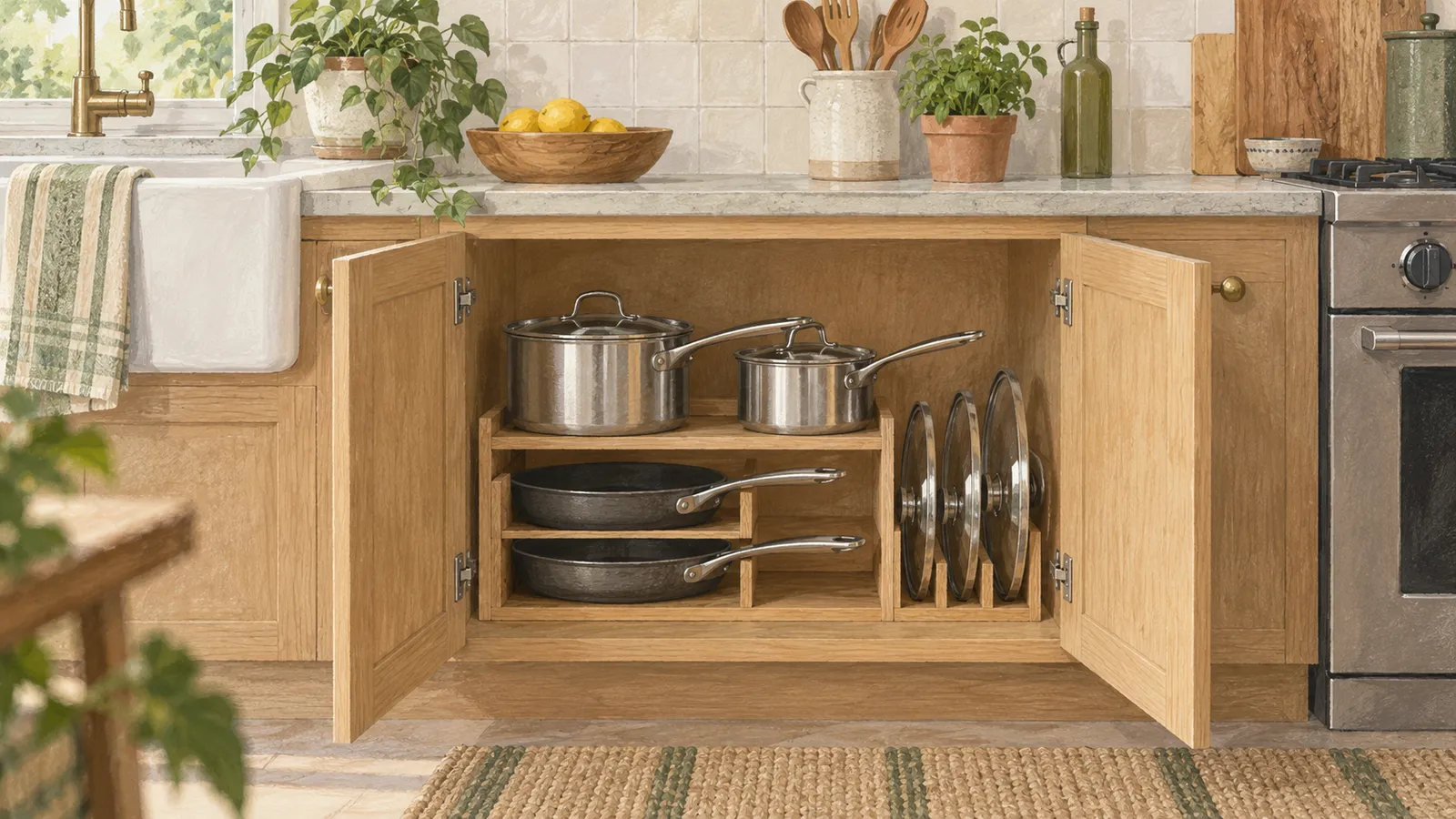
AI-generated editorial illustration; a conceptual scene, not a product photograph.
Store everyday pots and pans where you can reach them with a comfortable grip, preferably in a low drawer or accessible cabinet. Use a short nest for similar pots and upright divisions for frying pans and lids. Hanging can help if you have suitable wall space and fixings; check that the cookware will stay clear of people moving through the room.
Start with the cookware you use in a normal week. Separate storage for those pieces from the occasional roasting tin or large stockpot. You may need a better location more than another rack.
Lay the cookware out and identify what each piece does. Perhaps a saucepan cooks grains, a wide pan handles quick dinners and a larger pot makes soup. Keep duplicates if they serve a real purpose, such as cooking two dishes at once. A set does not have to stay together simply because it arrived in one box.
Notice which piece is awkward to lift. An empty pot may be manageable at chest height but difficult to remove from above your head. Store heavy cookware low, on a surface and mechanism rated for its weight. Check the cabinet manufacturer’s limits, including the organizer’s own weight where relevant.
If several pans do the same job and crowd out the pieces you use daily, work through the cookware choices in our minimalist kitchen guide before buying a rack.
| Method | Most useful for | Main compromise | Check before choosing |
|---|---|---|---|
| Short stacks | Similar saucepans, small numbers of pieces | Lower pieces require lifting others | Stable fit, surface protection, lifting weight |
| Upright rack | Frying pans, lids, baking sheets | Uses width and needs overhead clearance | Handle position, rack stability, exact dimensions |
| Deep drawer | Everyday mixed cookware | Drawer must carry the total load | Load rating, full opening, clearance above |
| Properly fixed hanging rail | Lightweight pieces with suitable handles | Visible cookware and wall space used | Wall construction, fixings, rail and hook ratings |
Two pots nested together can take less space than a large rack. Upright storage can save effort when you repeatedly need the bottom frying pan. A drawer may be the easiest answer for someone who finds reaching into a low cupboard uncomfortable.
Put the largest stable pot at the bottom and the smaller piece inside it. Test the nest before adding a third. Handles must not press against a coated cooking surface, and the upper pot should not wobble on the rim below.
For coated pans, follow the manufacturer’s storage advice and use a suitable separator if required. A clean, dry protector can prevent metal contact. Keep the stack short enough to lift comfortably, even with protectors between the pans. Make sure everything is dry before nesting it.
Do not bury your most-used frying pan beneath the entire set. You can store everyday pieces separately and nest occasional pieces behind them. This small change often makes a cabinet feel more spacious even when its contents remain the same.
Stand lids beside the nested pots instead of balancing them on top. Put the ones you use most near the opening, with occasional lids farther back. You should be able to find a pot and its lid while dinner is cooking.
Wide pans and baking trays lend themselves to file-like storage. Adjustable divisions let each piece stand separately so you can take one out without lifting the rest. Measure the item in its actual storage position, including the handle and lid knob.
Joseph Joseph’s DrawerStore cookware organizer has adjustable wire divisions and an expanding base. Check the manufacturer’s dimensions and permitted use against your cupboard and cookware. Make a paper outline of the base and try it inside your cupboard first.
For flatter items, YouCopia’s StoreMore Bakeware Rack is designed around upright trays and boards. A bakeware rack should not be treated as a heavy-pot rack unless its instructions allow that use. The advertised organizer dimensions also exclude the extra height of a tray standing in it.
Lids can need different spacing from pans. IKEA’s VARIERA lid organizer is adjustable, which can help accommodate knobs and differing thicknesses. Check the measurements and specifications in your local product listing; versions sold overseas may differ.
A suitable deep drawer brings cookware out toward you. Put heavy pots on the floor, set lids in a controlled row and leave room for your fingers around handles. Close it slowly during the first trial to check for protruding lids.
Avoid using the drawer’s depth for several hidden layers. If a shallow internal drawer is already fitted, it may hold utensils above the cookware, but its clearance becomes part of the calculation. Our deep drawer measurement worksheet helps you record those dimensions.
Try the arrangement with clean cookware and again after an ordinary dinner. A system that works only when you carefully align every handle may be too demanding. Give each pan a position that another household member can recognize without a photograph.
A hanging rail can free a cabinet and put a frequently used pan within reach. It also turns every stored piece into part of the room. If the cookware is rarely used, it may collect dust and cooking residue where it hangs.
Check the rail, hooks, fixings and wall as one system. A hook’s capacity does not establish the capacity of the wall or the rail. Do not hang heavy cookware from an adhesive hook just because it is described as a kitchen accessory. Use the installation specified by the manufacturer, and arrange help if you cannot identify the wall construction.
Position the rail away from a place where handles could catch passing clothing or where someone could strike a pan with their head. Keep it away from the hob’s heat and extraction path. Maintain appliance clearances and make sure pots cannot swing onto the cooking surface.
Renters who cannot alter walls can compare alternatives in our storage without drilling guide. A freestanding organizer inside a cabinet is often simpler than finding a wall solution.
Imagine a small kitchen with one low cabinet, two saucepans, a frying pan, a heavy casserole and a roasting tray. Put the casserole on the cabinet floor near the opening. Nest the two saucepans beside it. Stand the tray and frying pan in a suitable rack where their handles clear the shelf above. Store lids in a narrow row at the front or side.
This layout leaves the heavy piece supported and the everyday pan accessible. To see whether it works in your cabinet, draw the floor to scale and place paper shapes representing each item. Then try the real objects before shopping.
After a week, move any piece that still interrupts cooking or is awkward to put away. Leave a little unused space in the corner if that makes the rest easier to reach.
Sources describe their own scope and limitations. Read our sourcing policy.
Read more from the Minimalist Kitchen Living pillar.
Minimalist
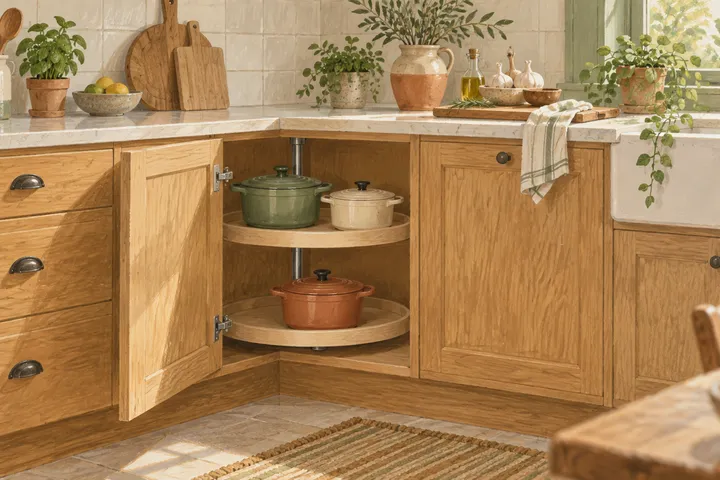
Identify corner cabinet types, map easy-reach zones and compare simple layouts with correctly matched rotating or swing-out fittings.
6 min read
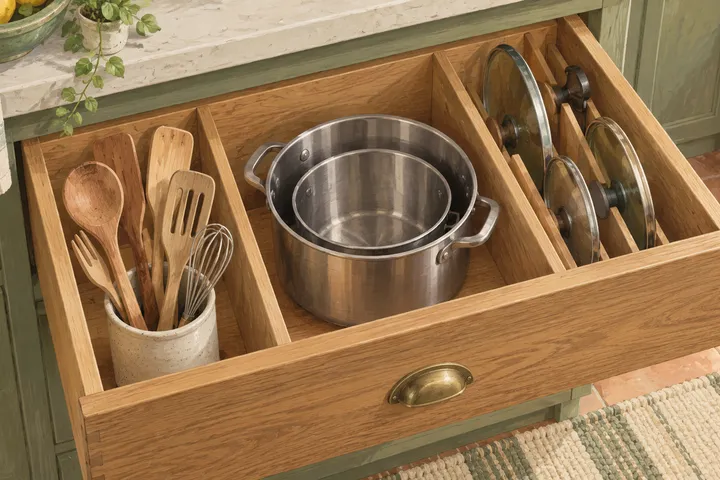
Measure usable drawer space, choose practical layouts for utensils, cookware and dry goods, and test the arrangement before buying organizers.
7 min read
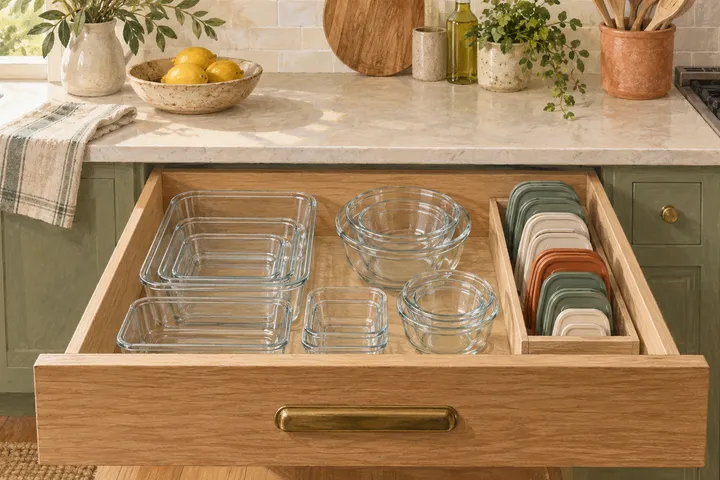
Match containers to lids and real meals, then choose nesting, upright dividers or assembled pairs with a practical weekly worksheet.
7 min read