How to Organize a Corner Kitchen Cabinet
Identify corner cabinet types, map easy-reach zones and compare simple layouts with correctly matched rotating or swing-out fittings.
6 min read
Choose spice storage by access, drawer fit, heat and light, with a small-collection worksheet and verified organizer examples.
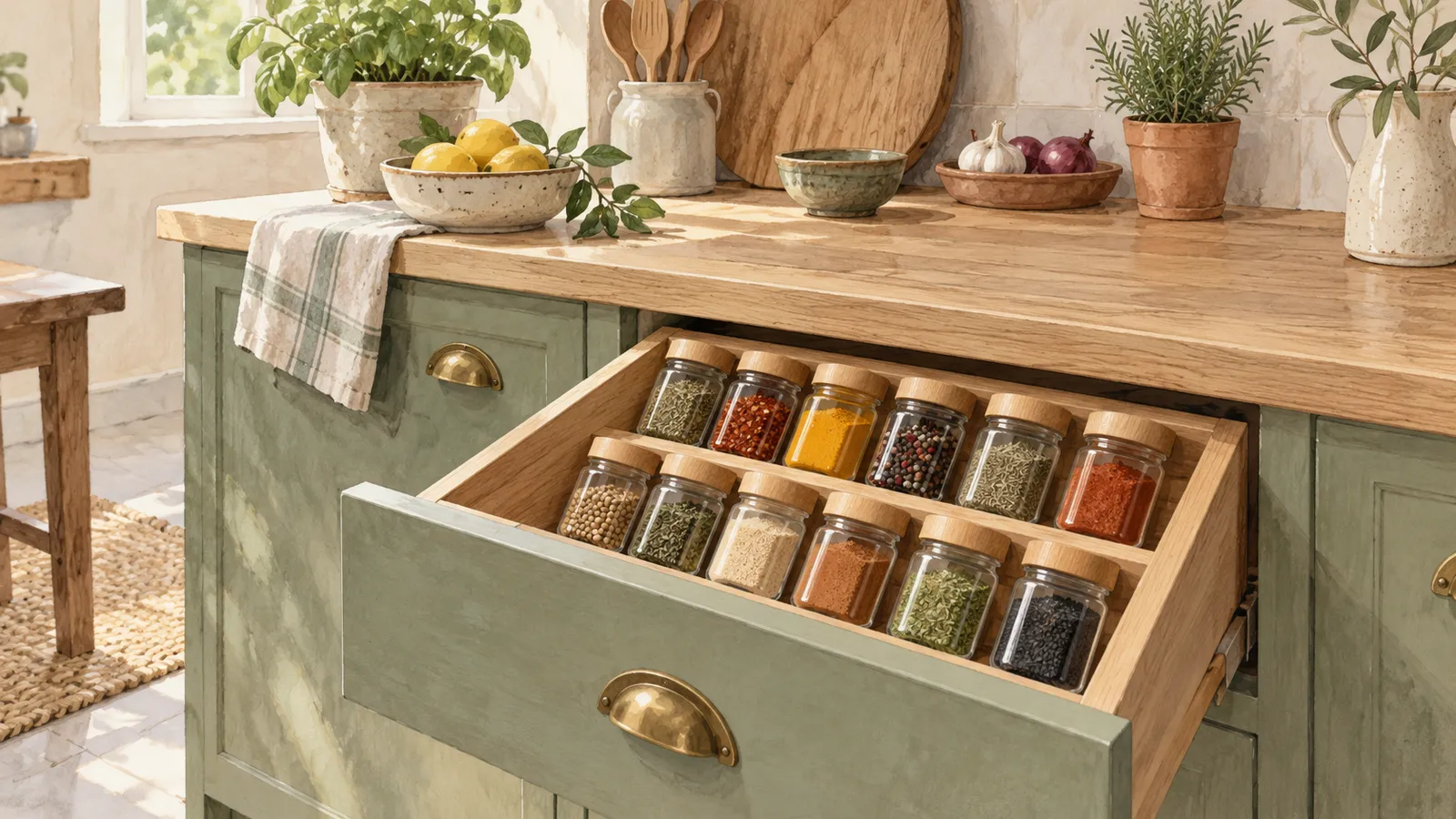
AI-generated editorial illustration; a conceptual scene, not a product photograph.
Store spices where you can see and reach them, away from the cooker, strong sunlight and damp areas. In a small kitchen, a shallow drawer often works well; a cabinet tray is a useful alternative when drawers are needed for utensils. Choose the location before choosing matching jars.
The aim is to find the cumin with one hand while dinner is underway. A collection that fits your cooking will do more for that than a large rack filled with spices you rarely use. If several cupboards are crowded, start with the storage priorities in the minimalist kitchen guide.
| Location | Works well when | Check before choosing | Main compromise |
|---|---|---|---|
| Shallow drawer | You can spare a drawer near the prep area | Internal height with jars and rack in place | Takes space from utensils |
| Cabinet tray or riser | You have a reachable shelf away from heat | Depth, door hinges and room to remove the tray | Rear jars can disappear |
| Wall or door rack | Suitable mounting and clearance are available | Load limit, door movement, heat and daylight | More exposed; installation may be required |
| Small freestanding caddy | You use a modest daily collection | Stable base and a home off the working surface | Can become permanent counter clutter |
An open rack beside the hob is convenient but a poor default for storage. McCormick’s storage advice recommends tightly closed containers away from heat, moisture and direct sunlight. Its guidance also advises measuring spices away from a steaming pan. Keep a spoon beside the cooking area, then return the jar to its cooler home.
Bring the collection together, including duplicates in shopping bags or distant cabinets. Group whole spices, ground spices, dried herbs and blends. Keep the original labels while you work: similar-looking powders are easy to confuse.
Separate the spices you use frequently from occasional baking or specialist ingredients. Use the meals you cooked recently to decide which jars need the easiest access. A household making dal several times a week will have a different daily group from one making pasta, soups and weekend baking.
Check labels and condition. Follow the product’s date and storage instructions; do not use one universal shelf-life rule for every spice. A date is not the only consideration if a jar has become damp or contaminated. When quality has faded, replacing a small pack may be more useful than keeping a large decorative jar indefinitely.
Set duplicates behind the active jar in one small reserve box. Add the contents to your shopping list inventory. Check that reserve box before shopping so a hidden refill does not lead to another duplicate.
Measure the usable width and depth inside the drawer, then the clearance above its base when closed. The decorative front height is not the available storage height. Test with your tallest jar and any proposed angled insert.
Lay jars on a cloth temporarily to try the arrangement. Make sure they cannot roll into the drawer mechanism or catch when it closes. Use a stable divider or suitable rack if the trial needs support. Allow enough room to lift a jar without levering it against the next one.
Leave a little empty space for a new jar so you can add it without rearranging the collection. Group by the meals you make, or alphabetically if several people share the kitchen. Choose the system that lets everyone return a jar reliably.
For a deep drawer, do not bury spices under bags of flour. Give them a shallow upper tray or a clearly divided section. The measurement worksheet in organizing deep kitchen drawers helps you check whether this uses the space sensibly.
A low tray lets you bring a group of jars forward. Put names on the lids if you look down into it, or on the front if the shelf is at eye level. Test the view while standing where you normally cook.
A stepped riser can reveal rear rows, but it also raises them. Make sure the tallest jar fits beneath the shelf above and that you can reach it without standing on an unstable object. A pull-down organizer needs space in front of the shelf as well as inside it.
The US-listed YouCopia SpiceStack 24 Bottle has three pull-down drawers and an approximate footprint of 28 × 27 × 21 cm (11 × 10.5 × 8.3 inches). The dimensions come from the manufacturer; we have not measured the rack ourselves. Compare the footprint with your cabinet, then check your widest and tallest jars against the stated limits.
Under-shelf racks also need careful checking. The UK-listed Joseph Joseph CupboardStore spice rack specifies shelf and jar dimensions and uses adhesive tape with its supporting hook. It should not be treated as a purely clipped, damage-free renter solution. Read the installation instructions before attaching it to a rented cabinet.
Fill in your own quantities for each group. The example collection is hypothetical.
| Group | Example quantity | Home | Refill rule |
|---|---|---|---|
| Everyday cooking | Eight jars | Front drawer rows | Check reserve box before buying |
| Baking | Four jars | Rear drawer row | Review before a baking shop |
| Occasional whole spices | Three packs | Closed cabinet tray | Keep labels and dates visible |
| Duplicate stock | Two packs | One reserve box | Open only when the active pack is finished |
Write down your usable space, tallest jar and widest jar beside the table. Then try returning five jars after cooking. If you have to move several unrelated objects, simplify the location before adding equipment.
Matching jars can make a drawer easier to fit, but they create another task. Keep the ingredient name, relevant label information and date with the new container. Do not pour a fresh pack over an unidentified old remainder simply to make every jar look full.
Choose lids that close properly and jars you can clean and dry according to their instructions. Avoid selecting a narrow neck if you normally use a measuring spoon. A wide opening is useful only if it still allows controlled pouring and a sound closure.
Small packs can suit occasional spices, even when the unit price is higher. Compare the pack price with the amount you are likely to use. Keep reserve quantities proportionate to your cooking and storage conditions.
After a few meals, notice which jars were awkward to reach. Move those forward and return unused jars to the occasional group. Keep the spices you use, giving the most convenient positions to your current favourites.
A monthly glance at the reserve box can be enough to prevent duplicates. Wipe spills when they happen and keep measuring tools dry. Let your cooking determine the collection as it changes through the year.
If cabinet space is scarce, compare the removable and freestanding options in kitchen storage without drilling. Try one tray of daily spices on a reachable shelf before committing to a larger rack.
Sources describe their own scope and limitations. Read our sourcing policy.
Read more from the Minimalist Kitchen Living pillar.
Minimalist
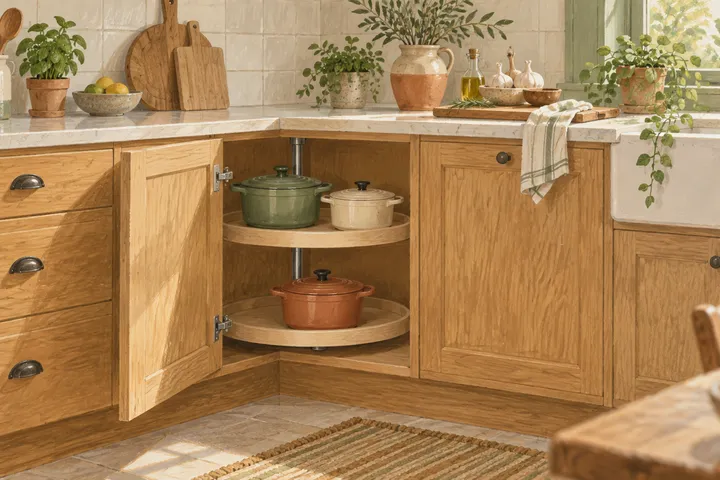
Identify corner cabinet types, map easy-reach zones and compare simple layouts with correctly matched rotating or swing-out fittings.
6 min read
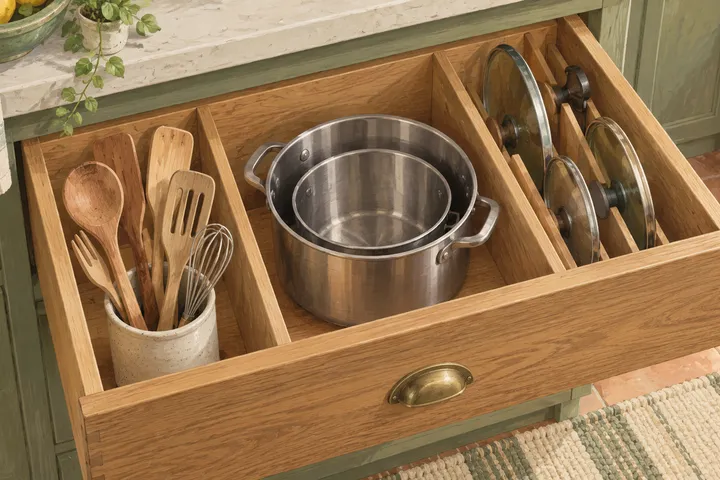
Measure usable drawer space, choose practical layouts for utensils, cookware and dry goods, and test the arrangement before buying organizers.
7 min read
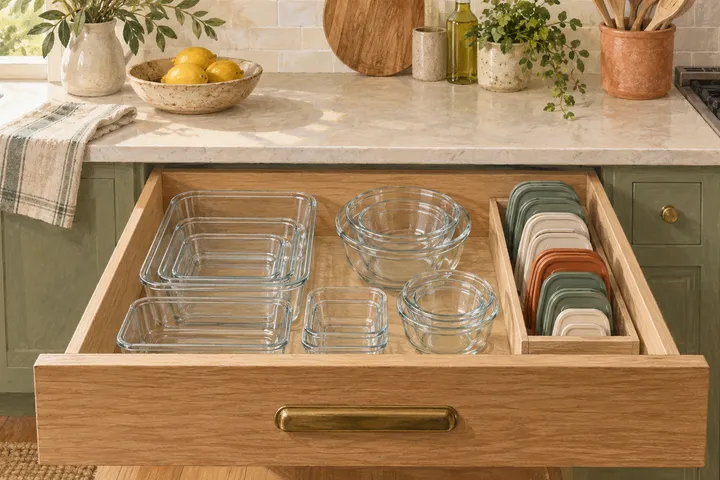
Match containers to lids and real meals, then choose nesting, upright dividers or assembled pairs with a practical weekly worksheet.
7 min read