
Carbon Steel vs Cast Iron
Choose between seasoned carbon steel and cast iron by actual weight, shape, cooking habits and maintenance.
7 min read
Check induction compatibility and coating claims separately, using an exact-model checklist and a cookware purchase worksheet.
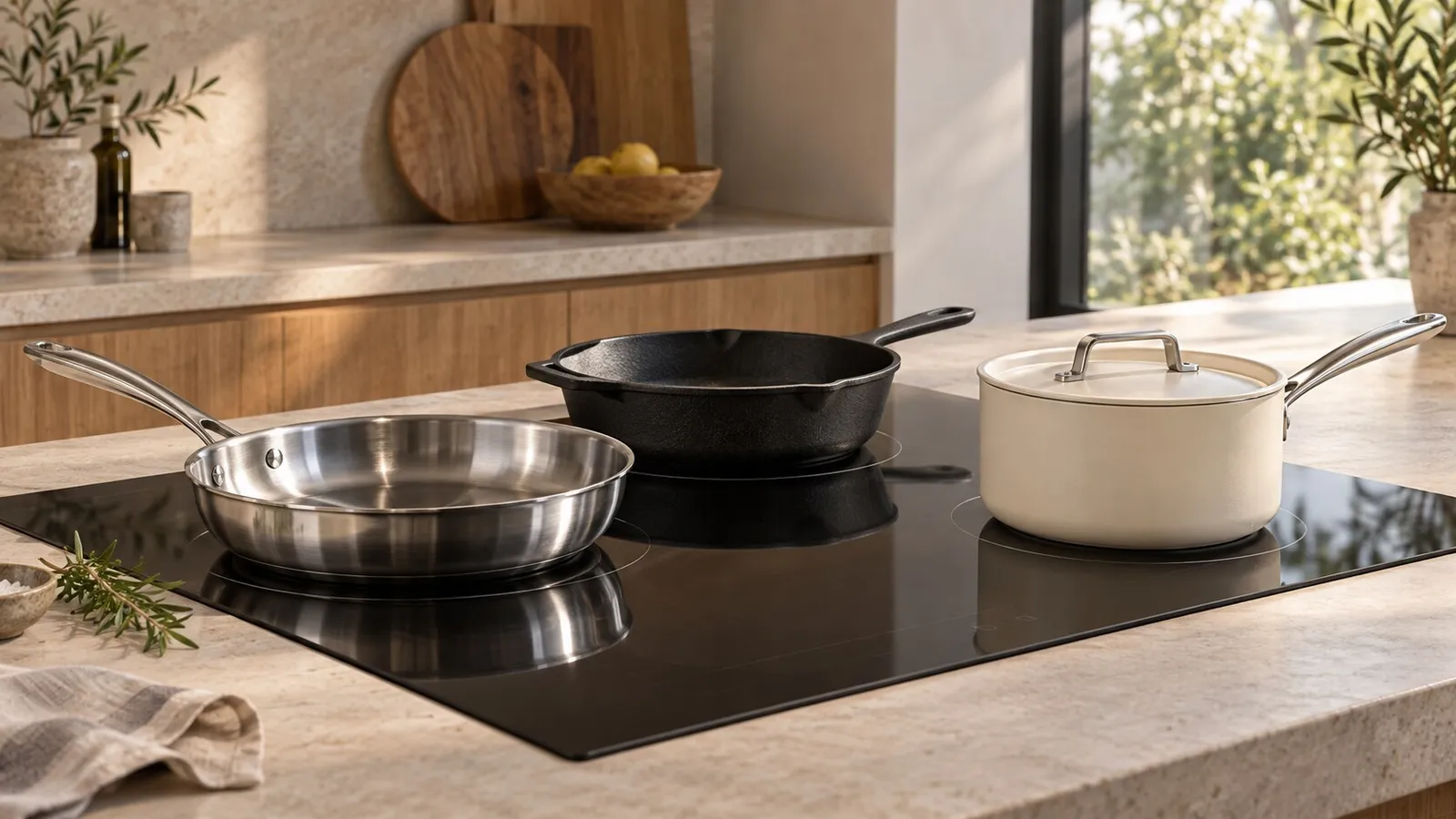
Editorial image for illustration; not a product-testing record or a documented kitchen project.
Some links may earn Zen Kitchen a commission if you buy, at no additional cost to you. Our evaluations are based on published sources. Read our affiliate policy.
For induction cookware, verify two things separately: the exact vessel works with your cooktop, and its material or coating matches the PFAS criterion you have chosen. A compatible base does not establish a coating claim. A PFAS claim does not establish that a small pan will register on your stove.
This is a researched purchase checklist, not a tested product ranking. Start with the pans you own before deciding to replace a full set.
ENERGY STAR explains that induction needs compatible cookware and offers a magnet-on-the-base check. Some existing cast-iron, stainless, and enameled vessels may already work. Then consult your cooktop manual for size and shape requirements.
The magnetic check is a useful first screen. It does not tell you whether the handle is comfortable, the surface matches your preferences, or the base meets every condition in your stove’s instructions.
Inspect the manufacturer description for the cooking surface. An induction base can be attached to vessels with different coatings or uncoated interiors. If avoiding PFAS is your criterion, look for an explicit statement about the exact product and the evidence behind it.
The materials guide explains how to separate a formulation claim from testing. The ceramic guide helps when a mineral or ceramic label is too vague to answer the question.
| Route | Compatibility check | Surface question | Practical consideration |
|---|---|---|---|
| Uncoated stainless | Check exact base and stove requirements | Confirm construction and any treatment | Match size to actual meals |
| Bare cast iron | Check dimensions and handling instructions | Read seasoning and care guidance | Consider lifting a full vessel |
| Carbon steel | Check base and exact model instructions | Read surface-care guidance | Check flatness and cleaning routine |
| Enameled metal | Check exact item and base | Confirm intended use and surface condition | Handle according to the maker’s instructions |
| Ceramic-coated metal | Confirm the induction-ready model | Find the explicit coating claim and scope | Read care and replacement terms |
This is a list of checks, not an assertion that all products in a material category work on induction. A saucepan and a frying pan from the same brand may have different dimensions or constructions.
Write down the requirements that apply to the burner you intend to use. Check the base diameter rather than rely only on the rim measurement in a product title. Include any requirements about flatness or centering given by the cooktop maker.
If a small pan fails to register, do not assume the cookware’s material claim was false. Compatibility and chemical composition answer different questions. Contact the manufacturers with the model names rather than improvise a fix outside their instructions.
Imagine a household with three compatible pots and one incompatible skillet. The buying problem is one skillet, not a complete kitchen. Compare the needed diameter and care routine first. A larger set may cost more and use storage without improving another task.
For a household with no compatible vessels, count cooking jobs instead of pieces. A skillet, a smaller saucepan, and a larger pot may cover the meals you make, or you may need a different mix. This is a planning suggestion, not a required kit.
| Field | Your check |
|---|---|
| Cooktop model and manual | |
| Burner or zone used most | |
| Required base size and shape | |
| Exact cookware model | |
| Manufacturer’s induction statement | |
| Cooking surface and PFAS criterion | |
| Supporting document or answer | |
| Cleaning and utensil instructions | |
| Cabinet and sink fit | |
| Current price and date |
Keep written answers or links beside the product name. If a field is uncertain, investigate it before treating the pan as a match. A useful shortlist can be small.
Do not assume that from the material name. Check the particular vessel’s base and instructions, then compare them with your cooktop’s requirements.
A ceramic-coated metal pan can be sold with an induction-compatible base. Solid ceramic is a different construction. Read the exact product description rather than transfer a claim between them.
No. The base and the cooking surface are separate parts of the decision. Verify each claim independently.
Consult the cooktop and cookware manufacturers before buying one. This guide does not establish compatibility or safety for an adapter arrangement.
No. Collections can differ, and the product you want may change over time. Save the exact model name and the instructions checked on your purchase date.
Keep reading: Cookware materials · Cookware sets compared · Caraway review · All cookware guides
Sources describe their own scope and limitations. Read our sourcing policy.
Read more from the Non-Toxic Product Curation pillar.
Non-Toxic
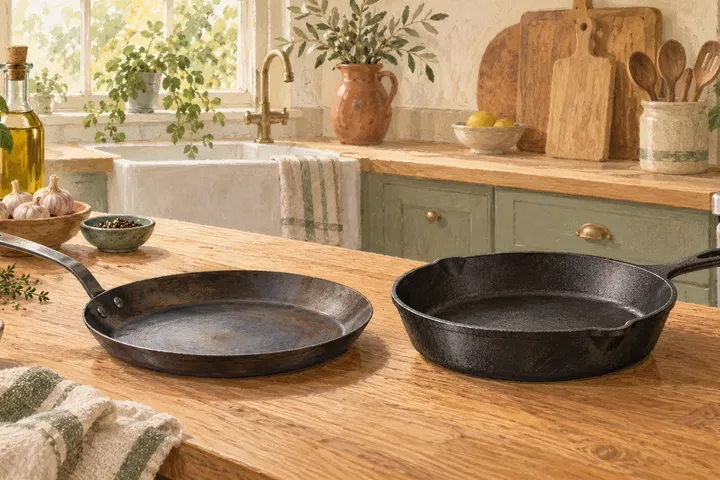
Choose between seasoned carbon steel and cast iron by actual weight, shape, cooking habits and maintenance.
7 min read
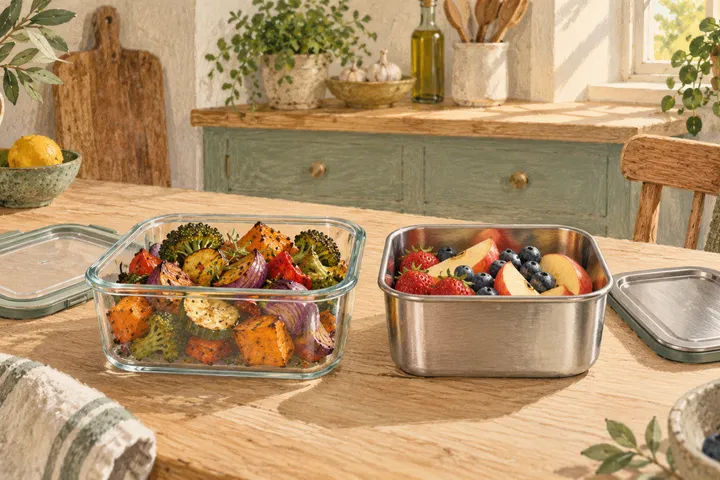
Compare food-container bodies, lids, leaks, carrying weight and exact appliance compatibility before buying a set.
7 min read
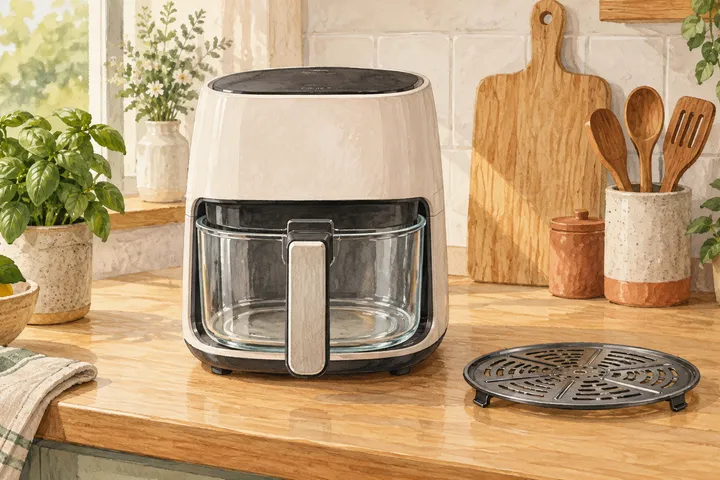
Check exact air-fryer models and food-contact parts, with a researched US shortlist and questions to clarify PFAS-free claims.
6 min read